



 Customer Dispute Resolution Page
 Help Center
 Affiliate Program
Play Anytime, Anywhere
In this article



Pineapple Poker is an exciting poker variant that challenges Texas Hold’em players who enjoy making complex pre-flop decisions.
Here, we will explain how the addition of a third hole card adds a new dynamic to pre-flop play, as well as the skills you need to become a better Pineapple Poker player.
If you’ve ever wanted to play Pineapple Poker like a pro, this guide will walk you through the rules, some example hands, and strategy tips to help you improve your pineapple poker game.
Pineapple Poker is a fun twist on traditional Texas Hold’em poker. The twist is that you receive three hole cards instead of two. Adding a third card means you've got an extra decision to make before the flop.
The third card completely changes the structure of the pre-flop play as it gives players more potential starting hands and more opportunities to make strong combinations post-flop.
That decision is the card you're going to fold. Sometimes it's obvious which card is best to fold, while other decisions are tougher. For example, if you're dealt A♠ K♠ 4♦, the obvious card to ditch is 4♦ because A♠ K♠ is a strong starting hand in Texas Hold 'em.
If, however, you're dealt J♣ 10♥ 5♥, the decision is less obvious. You could either fold the 5♥ and play for a straight with J♣ 10♥. Alternatively, you could fold the J♣ and play for a flush with 10♥ 5♥.
In this situation, folding the 5♥ is best because J♣ 10♥ gives you two high-value cards instead of one (i.e., 10♥ 5♥). It also gives you various straight possibilities. Therefore, you've got two ways to make potentially winning hands, rather than pinning your hopes on hitting a flush (if you kept 10♥ 5♥).

Let’s now move on to the Pineapple Poker rules and see how this key pre-flop decision affects the rest of the game.
Once you're comfortable with the basics of how to play poker, you'll see that Pineapple Poker is very similar to Hold 'em, except for the addition of a third hole card. This extra card means players receive three hole cards, discard one, and play the hand using standard Texas Hold’em rules for betting and community cards. The game plays out as follows:
A new game starts with two players posting forced bets known as the blinds. The small blind is half of the big blind. For example, if the big blind is $2, the small blind is $1.
All players receive three cards (i.e., hole cards that only they can see) once the blinds have been posted.
Each player must discard one card face down. This leaves each player with two cards.
Betting begins with the player immediately to the left of the big blind.
Play moves clockwise around the table with players folding, matching (also known as calling), or raising the last biggest bet.
If at least two players match the highest bet, the flop is dealt. If only one player remains, they win the pot immediately and a new game starts.
The action follows a similar pattern after the flop. Play starts from the small blind (or the first active player closest to the small blind), and players can check (if a bet hasn't been made), call, raise, or fold.
Pots are awarded to the last remaining player in the hand or to the person with the best five-card hand at a showdown.
Finally, remember that Pineapple Poker uses the same standard poker hand rankings as Texas Hold’em and other high-hand poker games. That means a royal flush is the best possible hand, while a high card is the worst.
Let's put these rules into a scenario that shows you how to play Pineapple Poker.
We can use the Pineapple Poker rules outlined in the previous section to create a fictional scenario. For this example, we'll use a six-max cash game with $1/$2 blinds.
The players at the table are of mixed ability, but they all understand the basics. The game begins with each player receiving three hole cards, one of which they must discard.
The Set-up
Cash Game
Number of players at the table = six
Blinds: $1/$2
First Round: Pre-Flop
The first round in Pineapple Poker takes place before any community cards are dealt, hence the term "pre-flop." This round is split into three parts: the dealing of three hole cards to each player, the discarding of one hole card, and the initial round of betting.
The Dealing of Hole Cards
Player 1 posts the $2 big blind and is dealt A♠ K♠ 2♦
Player 2 posts the $1 small blind and is dealt Q♣ 9♥ 3♦
Player 3 is dealt A♥ A♦ 8♠
Player 4 is dealt J♥ 4♠ 7♣
Player 5 is dealt 10♦ 8♥ 5♣
Player 6 has the button and is dealt J♣ 4♥ 6♠
The Discard
Player 1 discards the 2♦, which makes their starting hand A♠ K♠
Player 2 discards the 3♦, which makes their starting hand Q♣ 9♥
Player 3 discards the 8♠, which makes their starting hand A♥ A♦
Player 4 discards the 4♠, which makes their starting hand J♥ 7♣
Player 5 discards the 5♣, which makes their starting hand 10♦ 8♥
Player 6 discards the J♣, which makes their starting hand 4♥ 6♠
The Initial Betting Round
The first player to act before the flop in Pineapple Poker is the one sitting directly left of the big blind.
In this game, Player 2 posted the big blind, Player 1 posted the small blind, and Player 6 is on the button. This means Player 3 is the first to act, and the action moves clockwise around the table.
Player 3 raises to $6
Player 4 folds
Player 5 folds
Player 6 folds
Player 2 folds
Player 1 calls
Second Round: The Flop
After the flop, play begins with the person sitting closest to the small blind. In our scenario, the small blind (Player 1) is active in the hand, so they make the first move.
Pot = $13
Board = 5♠ 10♠ K♣
Player 1 bets $10
Player 3 raises to $35
Player 1 calls
Third Round: The Turn
Action on the turn proceeds in the same way as the flop, with Player 1 making the first move.
Pot = $83
Board = 5♠ 10♠ K♣ 9♦
Player 1 checks
Player 3 bets $75
Player 1 calls
Fourth Round: The River
The final round, as before, sees Player 1 make the initial move.
Pot = $233
Board = 5♠ 10♠ K♣ 9♦ 3♠
Player 1 checks
Player 3 bets $100 (all-in)
Player 1 calls
Showdown
Player 1 shows a flush: A♠ K♠ 10♠ 5♠ 3♠
Player 3 shows a pair of aces: A♥ A♦ K♣ 10♠ 9♦
Result
Player 1 wins the pot ($433) with a flush
The result of our Pineapple Poker example hand is that Player 1 wins. That's because we use standard poker hand rankings to determine which hand is better after a showdown.
In this example, Player 1's flush beats Player 3's pair of aces.
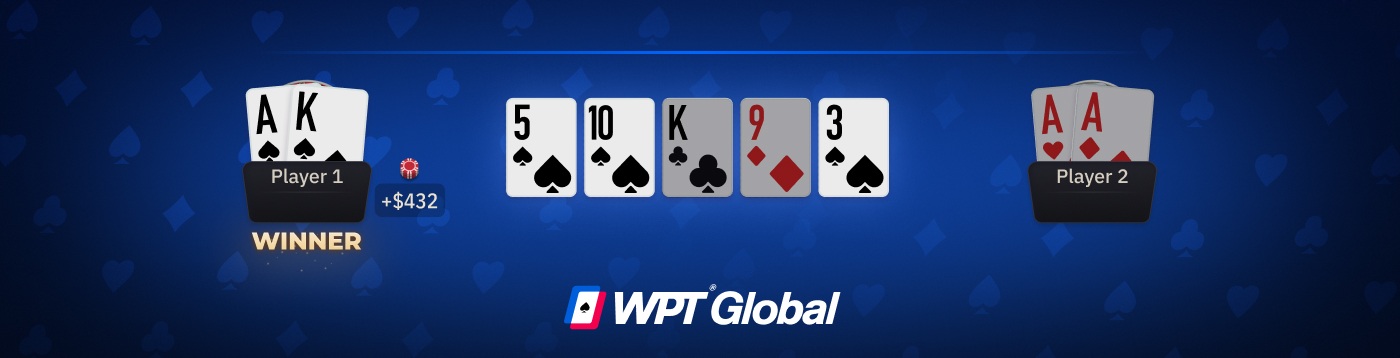
This example shows how standard poker hand rankings determine the winner in Pineapple Poker, emphasizing the importance of evaluating both your hand strength and your opponent’s potential range.
There are four popular Pineapple variants you can try in home games, online poker rooms, or live poker tournament festivals:
Crazy Pineapple: The difference between Pineapple Poker and Crazy Pineapple is the point at which you discard one card. In Pineapple, you discard one of your three cards before the betting begins. In Crazy Pineapple, you discard one card after the flop.
Lazy Pineapple: As its name suggests, this Pineapple Poker variant allows you to be lazy. In this context, being lazy means not deciding which of your three cards you want to discard until the river. The only time you have to decide which two cards you're going to use is if you go to a showdown.
Irish Poker: This variant combines the rules of Crazy Pineapple with Omaha. This means you start with four hole cards and keep them until the flop. Once the flop has been dealt, players discard two cards and keep two. After this, the game follows the same pattern as Texas Hold'em.
Pineapple Open Face Chinese Poker: This spinoff of Open Face Chinese (OFC) Poker requires players to create three hands (bottom, middle, and top) using 13 cards. As per the rules of OFC, players must set their hands in strength order from strongest to weakest. The bottom and middle hands contain five cards, while the top hand has three. The difference between regular OFC and OFC Pineapple is that players receive their cards in batches of three and discard one, instead of drawing cards one at a time.
Those variants are fun. However, we recommend learning the basics of Pineapple Poker and, in turn, some fundamental strategy concepts before you experiment with new variants.
Once you understand the base rules of Pineapple Poker, you can then explore fun variations such as Crazy Pineapple or even Pineapple Open Face Chinese Poker to mix up your play style.
Our experts have been mastering different poker games for decades, and the same fundamentals apply perfectly to Pineapple Poker. Here are the core skills you should master before you start playing Pineapple Poker:
1. Opening ranges
As a general rule, you should enter pots with high pairs, strong aces (e.g., A-K), and, when the situation permits, suited connectors.
2. Position
Your position at the table can dictate almost every decision you make. Good position also gives you control over the betting flow and allows you to react to other players’ actions rather than guessing blindly. The principle to remember is that acting later gives you more information. Having more information than someone else gives you the chance to make better decisions. For example, let's say you know someone is a loose player who likes to bluff, and you get to act after them. You can use your position to trap them with a strong hand.
3. Bet sizing
Every bet you make should be sized according to the desired outcome. For example, if you've got a medium-strength hand, it's often best to balance risk and reward by making small bets. If, however, you've got an unbeatable hand, you should bet the maximum you believe someone will call.
This approach can help you extract the maximum value with your strongest hands while minimizing losses when your holding is only moderately strong.
For example, if the pot is $100 and you're holding the nut flush, aim to bet 80% of the pot or more ($80+), rather than something smaller, such as $50. Even though your opponent may be tempted to call a smaller bet more often, you may actually win less in the long run.
Here's what we mean. If your opponent calls a $50 bet, you'd win a $200 pot. If they called that bet nine times out of ten, you'd win a total of $1,800. If, however, you bet $90 and the only calls, you win $280. They'd only need to call this bet seven out of ten times for you to make more money ($1,960 in total).
Those are the fundamental skills you need to master if you want to become a strong poker player. The other thing you need to consider is your starting hand. The card you discard has an impact on your chances of winning.
The golden rule here is to discard low-value cards and disconnected cards. For example, if you're dealt K♣ J♥ 3♦, you should discard the 3♦ because K♣ J♥ gives you two high cards. They're also connected in the sense that they can form part of a straight.
If all of your cards are disconnected (in terms of suit or value), or you only have one high-value card, the best thing to do is discard something and fold pre-flop. If you can keep these rules in mind, you'll have a much better chance of making +EV plays in Pineapple Poker.
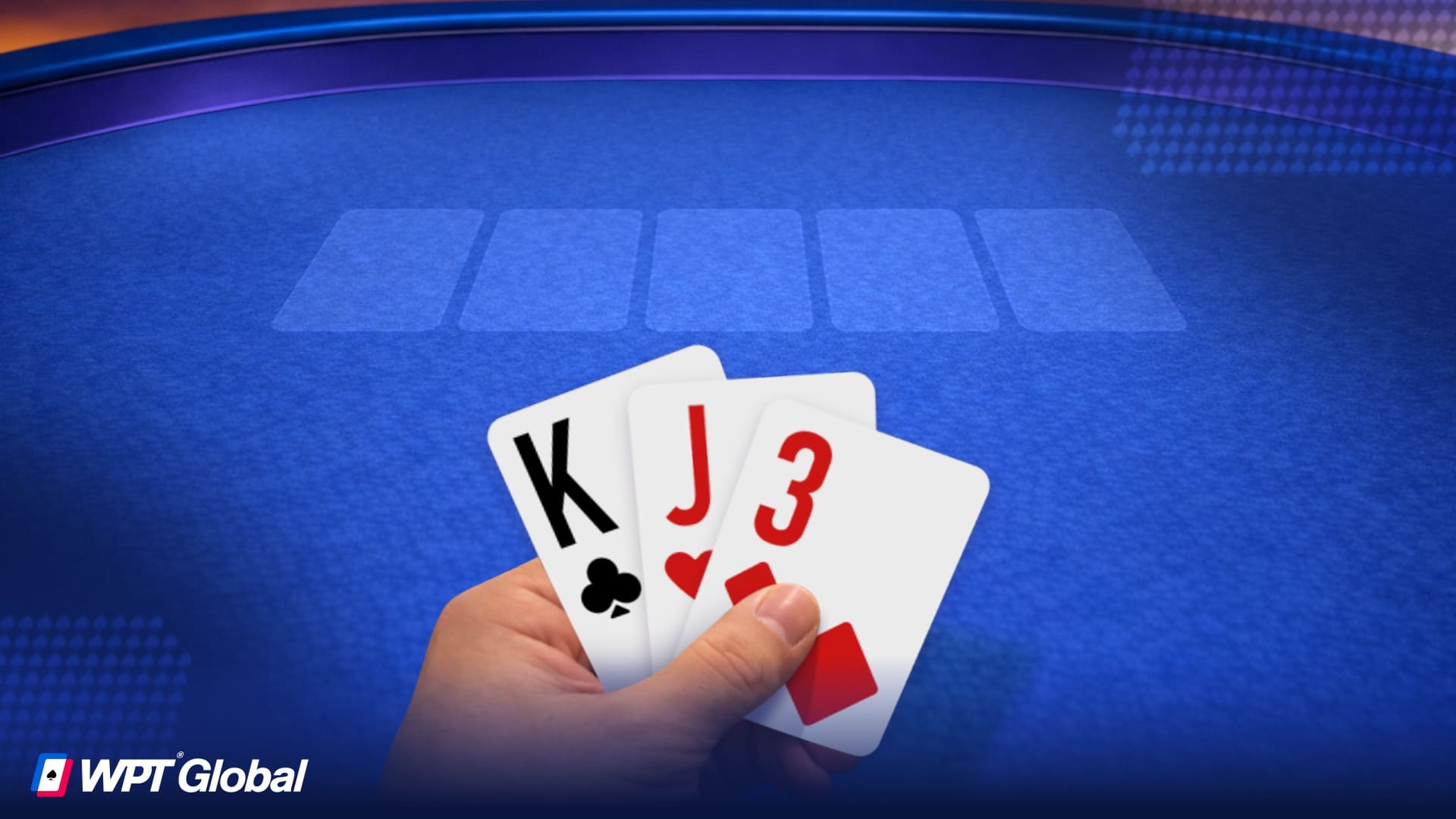
With practice, you can earn to read opponents and balance your ranges. This will help you make smart fold decisions when you discard one card before the flop.

Everyone receives three hole cards in Pineapple Poker. You can only use two of them, which means one of the three cards has to be discarded before the pre-flop betting round starts, leaving you with two cards to play.
No, Pineapple and Omaha are different poker variants. Pineapple is based on Texas Hold'em and features three hole cards. Omaha is a variant in which all players have four hole cards and must use two of them.
The difference between Pineapple and Crazy Pineapple is the point at which you discard one of your hole cards. In Pineapple, a card must be discarded before the pre-flop betting round starts. In Crazy Pineapple, you discard one card after the flop has been dealt.
Everyone receives three hole cards in Pineapple Poker. You can only use two of them, which means one of the three cards has to be discarded before the pre-flop betting round starts, leaving you with two cards to play.
The difference between Pineapple and Crazy Pineapple is the point at which you discard one of your hole cards. In Pineapple, a card must be discarded before the pre-flop betting round starts. In Crazy Pineapple, you discard one card after the flop has been dealt.
No, Pineapple and Omaha are different poker variants. Pineapple is based on Texas Hold'em and features three hole cards. Omaha is a variant in which all players have four hole cards and must use two of them.
Everyone receives three hole cards in Pineapple Poker. You can only use two of them, which means one of the three cards has to be discarded before the pre-flop betting round starts, leaving you with two cards to play.
The difference between Pineapple and Crazy Pineapple is the point at which you discard one of your hole cards. In Pineapple, a card must be discarded before the pre-flop betting round starts. In Crazy Pineapple, you discard one card after the flop has been dealt.
No, Pineapple and Omaha are different poker variants. Pineapple is based on Texas Hold'em and features three hole cards. Omaha is a variant in which all players have four hole cards and must use two of them.


 Local Payment Methods
 Cards
Cards Crypto
 E-Wallets
 Apple Pay
 Google Pay
 Instant Bank Payments
Some methods may not be available in your region. Please contact support if you experience any issues.