














 Customer Dispute Resolution Page
 Help Center
 Affiliate Program




Short Deck Poker: The Basics
What Makes Short Deck Different from Texas Hold’em?
Short Deck may look like Texas Hold’em, but small changes in rules lead to major shifts in strategy.
Feature | Short Deck (Six-Plus Hold’em) | Texas Hold’em |
|---|---|---|
Deck Size | 36 cards (2s, 3s, 4s, 5s removed) | Full 52-card deck |
Hand Rankings | Flush beats a Full House | Full House beats a Flush |
Blinds vs. Antes | No blinds, ante-based system | Uses small and big blinds |
Straight Rules | Aces play low in 9-high straights: A-6-7-8-9 | Aces play low in 5-high straights: A-2-3-4-5 |
More Action | Bigger hands = More betting, larger pots | More balanced hand distribution |
Since players get stronger hands more often, bluffing and aggression are key to winning in Short Deck.
New to poker? Take a moment to learn the poker terms - it'll make it much easier to win big when you understand the lingo!
The Objective of the Game
Short Deck flips the script of traditional poker. You'll play with a 36-card deck, where all cards from 2 to 5 are removed. However, just like traditional poker, the aim of the game is to:
- Make the best five-card poker hand using two hole cards and five community cards.
- Outplay your opponents by forcing them to fold with bluffs and aggressive bets.
- Maximize your winnings by understanding the unique hand rankings and probabilities.
Short Deck vs. Standard Hold’em Deck
The biggest difference between Short Deck and Hold’em is the removal of low cards (2-5). This changes the way hands are made and hand values shift.
Deck Type | Cards Used | Effect on Gameplay |
|---|---|---|
Standard Hold’em Deck | 52 (A-2-3-4-5-6-7-8-9-10-J-Q-K) | Balanced hand frequencies |
Short Deck (Six-Plus) | 36 (A-6-7-8-9-10-J-Q-K) | More frequent big hands & action |
For example: In Hold’em, a Full House is much stronger than a Flush. In Short Deck, Flushes happen less often, making them more valuable.
Short Deck Hand Rankings
Short Deck hand rankings differ from Hold’em, mainly because the probability of making certain hands changes.
Hand Ranking | Example | Description |
|---|---|---|
Royal Flush | 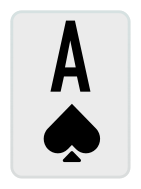 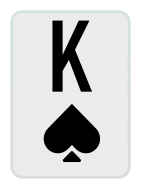 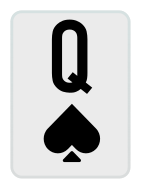 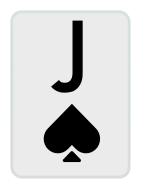 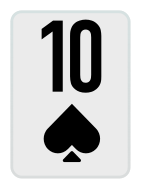 | The strongest hand in poker. |
Straight Flush | 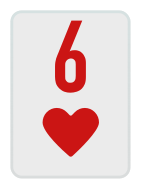  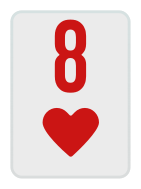 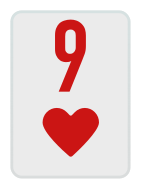  | Five consecutive suited cards. |
Four of a Kind |  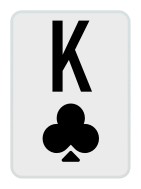 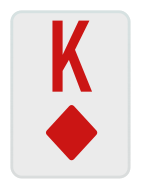 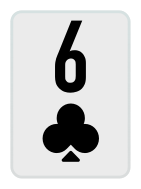 | Four cards of the same rank. |
Flush |  | Five cards of the same suit. Beats a Full House! |
Full House | 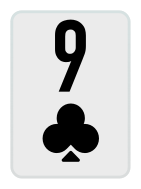 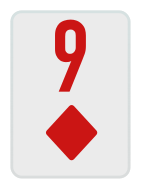 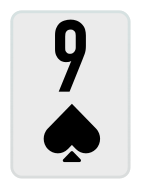 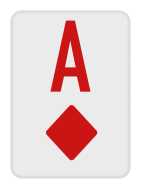 | Three of a kind + a pair. |
Straight | 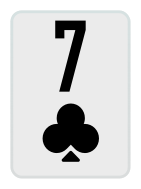 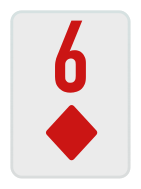 | Five cards in sequence (A can be low). |
Three of a Kind | 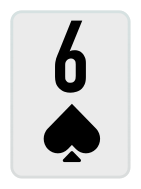 | Three matching cards. |
Two Pair |  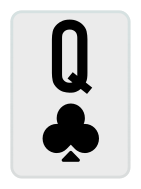 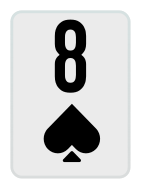 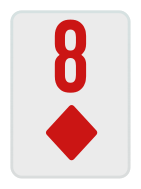 | Two different pairs. |
One Pair | 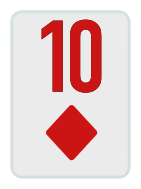 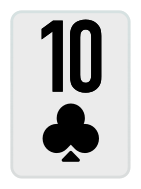 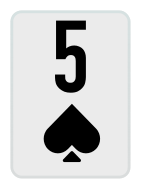 | Two cards of the same rank. |
High Card |  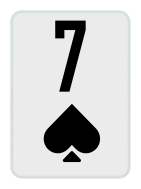 | No pairs—highest card wins. |
It's important to note that in Short Deck, suits aren't ranked. If two or more players have the same hand type (e.g. they have a flush), the hand with the highest cards wins. So, a flush with a King high beats a flush with a Queen high, no matter what suits are involved.
Short Deck Poker Rules - How to Play a Hand Step-by-Step
Short Deck Poker may look similar to Texas Hold’em, but its rule variations create a game that’s faster, looser, and full of action.
The objective remains the same—make the best five-card hand using a combination of your two hole cards and five community cards.
However, key rule changes dramatically impact strategy:
- No Small or Big Blinds – Instead, every player antes into the pot, ensuring there’s always something to play for.
- Flushes Beat Full Houses – Since there are fewer suited cards in the deck, flushes are harder to make—so they rank higher than full houses.
- Aces Are Dual-Purpose – Aces act as both the highest and lowest card, meaning unique straight combinations like A-6-7-8-9 are possible.
- Bigger Hands, Bigger Pots – With fewer low cards in the deck, premium hands are more common, leading to bigger bets and high-volatility gameplay.
The Ante System
In Short Deck, every player pays an ante instead of traditional blinds. This removes slow, fold-heavy gameplay and ensures that every hand starts with money in the pot.
Here’s how it works:
- Each player posts an ante before the cards are dealt, creating instant action.
- The dealer (button) posts a larger ante—usually 2-4x the standard ante—to further increase the stakes.
- There’s no small or big blind—players can check preflop if nobody raises, making for unpredictable hand ranges.
Because every player is invested from the start, Short Deck forces more aggressive play. You can’t just fold and wait for a premium hand—you have to battle for every pot.
This ante-driven format keeps the game fast, dynamic, and filled with high-pressure decisions—making Short Deck one of the most thrilling poker variants available.
Betting Rounds
Short Deck follows the same betting structure as Texas Hold’em, but with bigger pots due to antes.
Here's how it works:
1. The Preflop - Get Your Hole Cards & Decide
The game starts with each player getting two cards face down—your secret hole cards.
Based on the strength of your cards, you need to decide whether to:
- Fold: Give up your hand
- Call: Match the current bet
- Raise: Increase the current bet size

2. The Flop - Action Begins
Now, three cards are dealt face up in the center of the table—the community cards. Everyone can use them to make their strongest hand. Betting resumes.

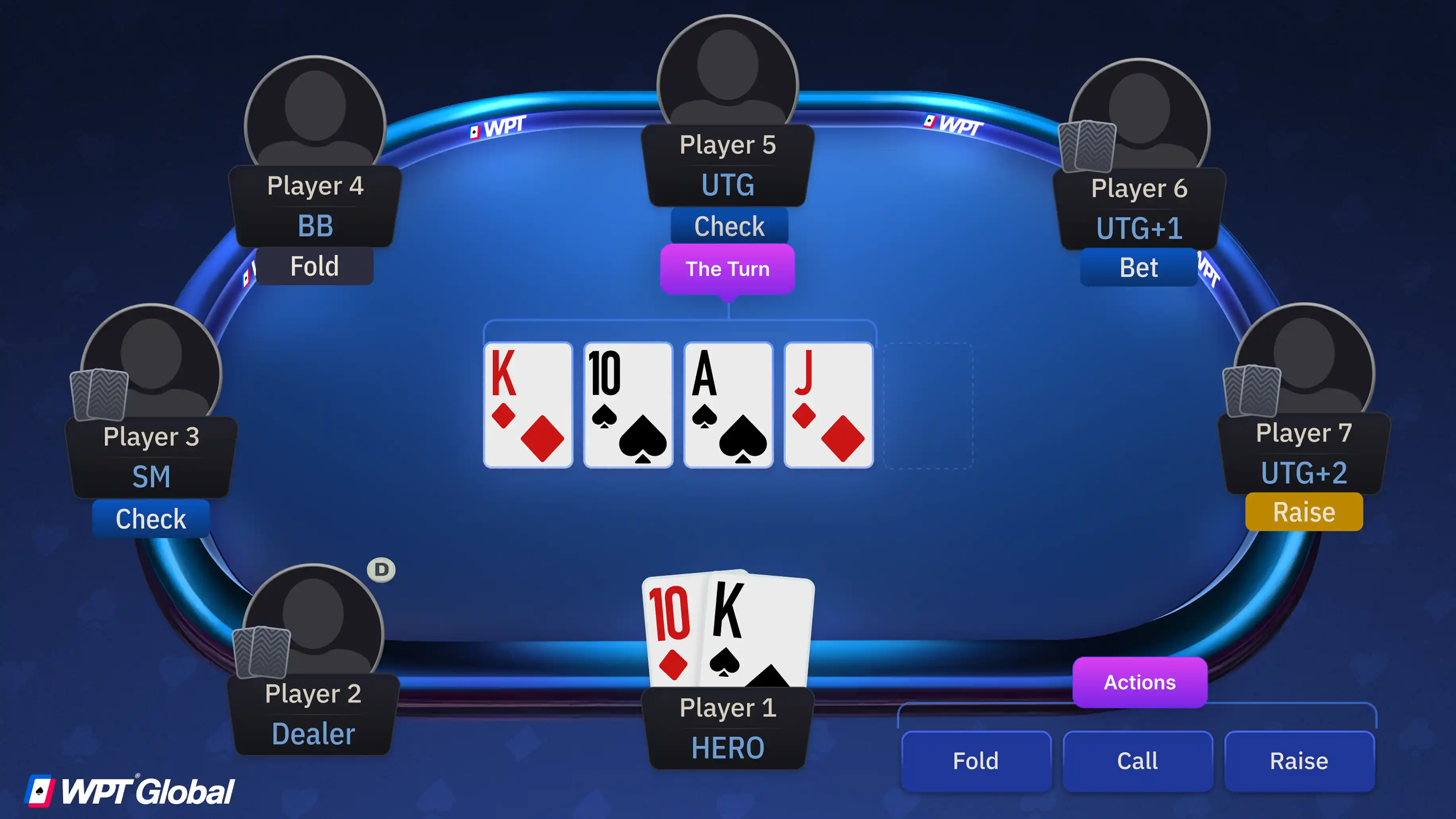
3. The Turn - More Action
On The Turn, a fourth community card is dealt face up. Then, dictate your betting move:
- Check: Pass the action to the next player without betting if no bet has been made
- Fold: Give up your hand
- Call: Match the current bet
- Raise: Increase the current bet size
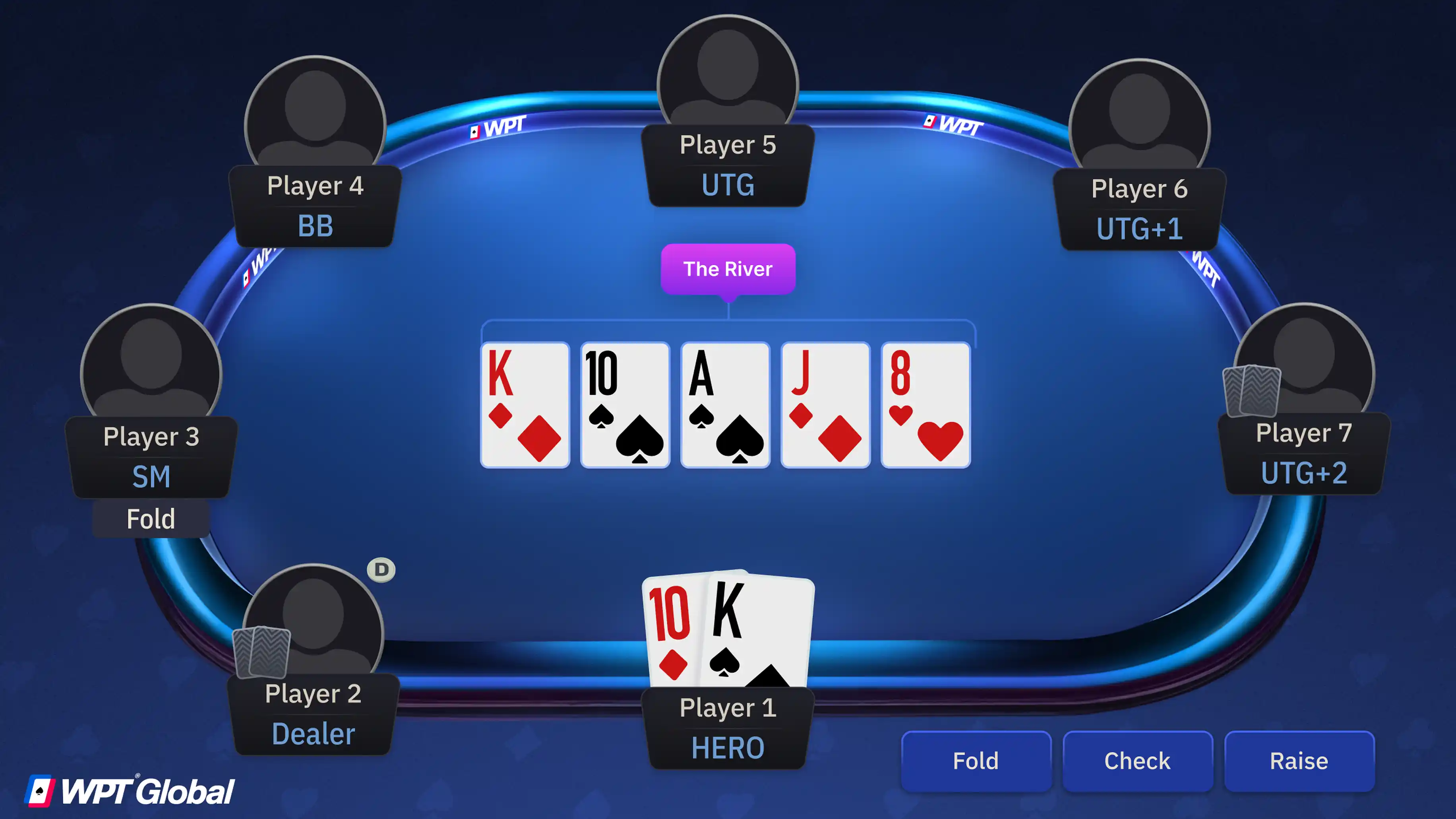
4. The River - Last Community Card Revealed
The fifth and final community card is revealed. Now, make your biggest decision: bet, call, check, or fold. This is where fortunes can be won or lost.
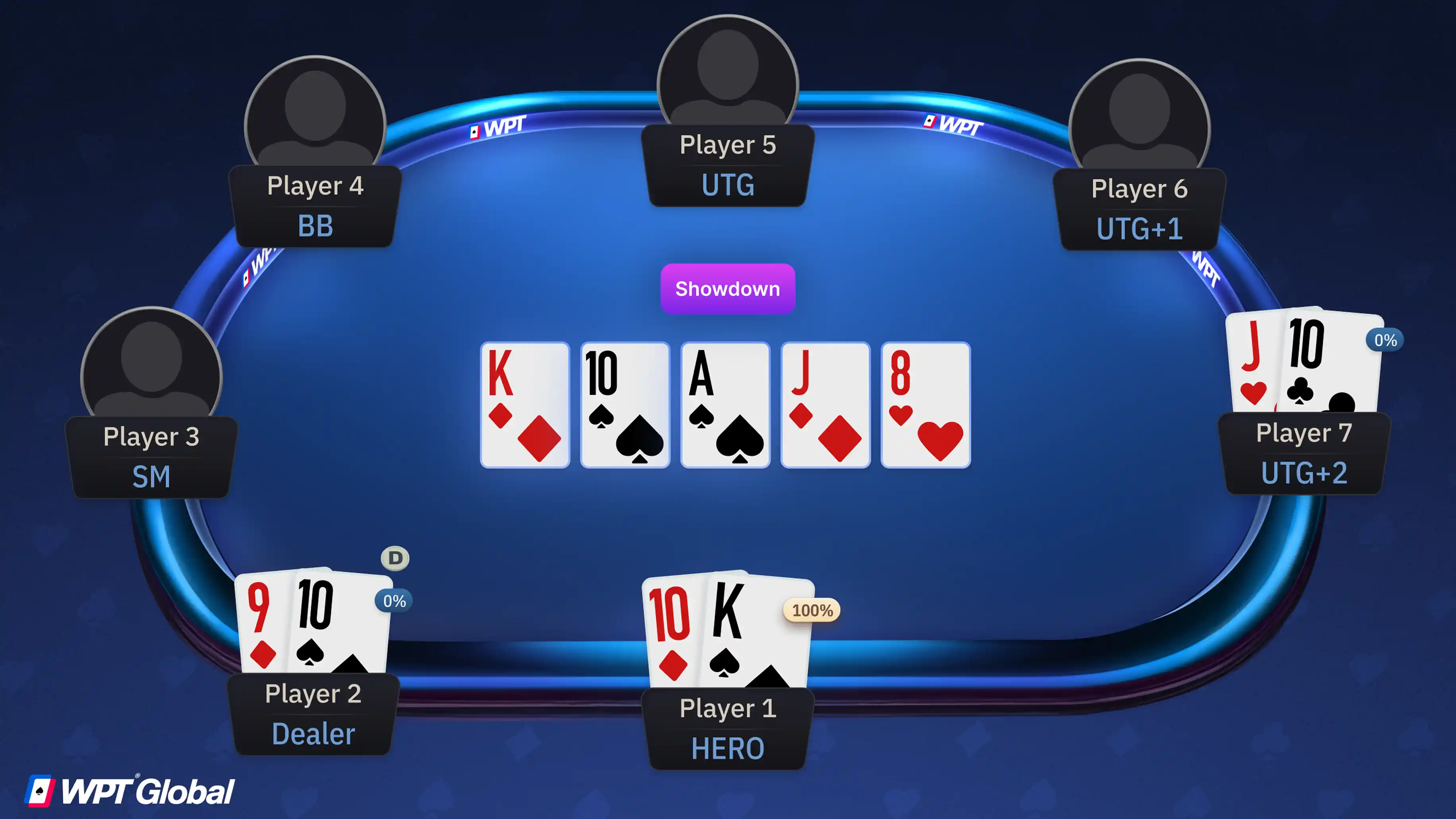
5. Showdown - Who Wins?
If there's more than one player left after The River, it's time for an epic showdown. This means that all the remaining players reveal their hole cards. Have the best five-card hand, win the pot.
Best Starting Hands in Short Deck
Since there are fewer cards in Short Deck, some starting hands become more powerful while others become weaker.
Hands that stay strong
Big pairs, like A♥A♦ and K♣K♥, are still strong starting hands. But don't forget, strong hands are common in Short Deck. Don't expect the same dominance as in traditional Hold'em.
Hands that get stronger
Hands like J♦10♦ of the same suit (suited connectors) gain immense value in Short Deck. Straights and flushes are frequent, making these hands powerful.
Hands that are still Ok
Starting hands like A♣K♦ and A♠Q♥ hold value, but understand the risk. Expect strong opposition post-flop and adjust your strategy accordingly.
Hands that get weaker
Middle pairs, like 9♠9♦, lose a lot of their power. In Short Deck, it's more likely someone has a bigger pair or makes a straight or flush that beats you.
If you're ready to master strong starting hands in other poker games, check out our full poker hands guide.
Short Deck Strategy: How to Win More Pots
Short Deck poker is all about fast action, big hands, and aggressive play.
With a smaller deck and more frequent premium hands, standard Hold’em strategies won’t cut it—you need a new approach to stay ahead.
1. Play More Hands, But Choose Wisely
In Short Deck, strong hands are common, so tight-passive play won’t work. You need to play more hands, but don’t get reckless—focus on hands that connect well with the board, such as suited connectors and pocket pairs.
2. Don’t Overvalue Small Pocket Pairs
Hands like pocket 6s or 7s might seem strong, but they lose value fast in Short Deck because straights and flushes hit more often. Instead of relying on small pairs, look for big Broadway hands (A-K, Q-J, etc.).
3. Chase Strong Draws Aggressively
Since there are fewer low cards, you’ll hit straights and flushes far more often than in Texas Hold’em. If you have a straight or flush draw on the flop, you should bet aggressively rather than passively waiting to hit it.
4. Be Ready to Bluff More
With more players making strong hands, it’s easy to assume that big bets always mean big hands. This is where strategic bluffing comes in. If you sense hesitation, a well-timed overbet or shove can steal pots even when you don’t have the nuts.
5. Adjust to the Ante-Driven Action
Since every player antes into the pot, there’s always something to fight for—meaning you can’t just sit back and wait for premium hands. Take advantage of loose players who play too many weak hands and punish them with well-timed raises and reraises.
Short Deck Hand Probabilities
With fewer cards in the deck, the odds or probability of making strong hands in Short Deck Poker change drastically from Texas Hold’em.
Flushes occur less frequently, which is why they outrank full houses, while straights are more common due to the absence of low cards.
These probability shifts impact both hand values and betting strategies, making it essential to adjust your approach when playing Short Deck.
Hand | Probability (Short Deck) | Probability (Texas Hold’em) |
|---|---|---|
Flush | 7.2% | 3.03% |
Straight | 9.1% | 4.62% |
Full House | 3.9% | 2.60% |
Key Takeaway: Flushes happen less often—that’s why they rank above a Full House!
Advanced Short Deck Strategy for Serious Players
Once you’re comfortable with the basics, it’s time to refine your strategy and play Short Deck like a pro.
1. Understand Hand Equity & Adjust Your Preflop Ranges
In Short Deck, hand equities run much closer together compared to Texas Hold’em. Even hands that seem weak in Hold’em—like J-10 suited—can be powerhouses in Short Deck because they make flushes and straights more often.
- Big pairs (Aces, Kings) still hold value, but aren’t as dominant
- High-suited connectors (J-10, Q-J) increase in strength.
- Suited Aces can be played aggressively for flush potential.
2. Use the Short Deck Hand Rankings to Your Advantage
Since flushes beat full houses, you should always chase flush draws harder than you would in Texas Hold’em. If you’re on a flush draw, your implied odds are much stronger than in traditional poker games.
3. Overbet the Pot to Apply Maximum Pressure
Because players frequently hold strong hands, a standard bet size isn’t enough to push people off their draws. Instead, advanced players often use overbets (betting 1.5x-2x the pot) to pressure opponents into making tough decisions.
4. Exploit Position to Control the Table
Position is even more critical in Short Deck than in Hold’em. Since equities run closer, playing hands in position allows you to see what your opponents do first, giving you a huge strategic advantage when making post-flop decisions.
5. Adjust Your River Strategy for More Hero Calls
Because the deck is smaller, players tend to bluff more often on the river. If an opponent is making a big shove and you have a decent hand (like two pair or a weak straight), you should consider calling more often than you would in Hold’em—since their range is likely wider.