









 Customer Dispute Resolution Page
 Help Center
 Affiliate Program


Omaha Poker: The Basics
Omaha follows the same general structure as Texas Hold'em, but with key differences that impact strategy and gameplay. The most popular variant of Omaha is four-card PLO, but five and six-card PLO are growing in popularity too.
Basic Rules of Omaha Poker
- Deck: The game is played with a standard 52-card deck.
- Hole Cards: Each player is dealt four private (hole) cards face down (instead of two in Hold’em).
- Community Cards: Five shared cards are dealt face-up in the center, forming the "community cards". These are the building blocks of your winning hand.
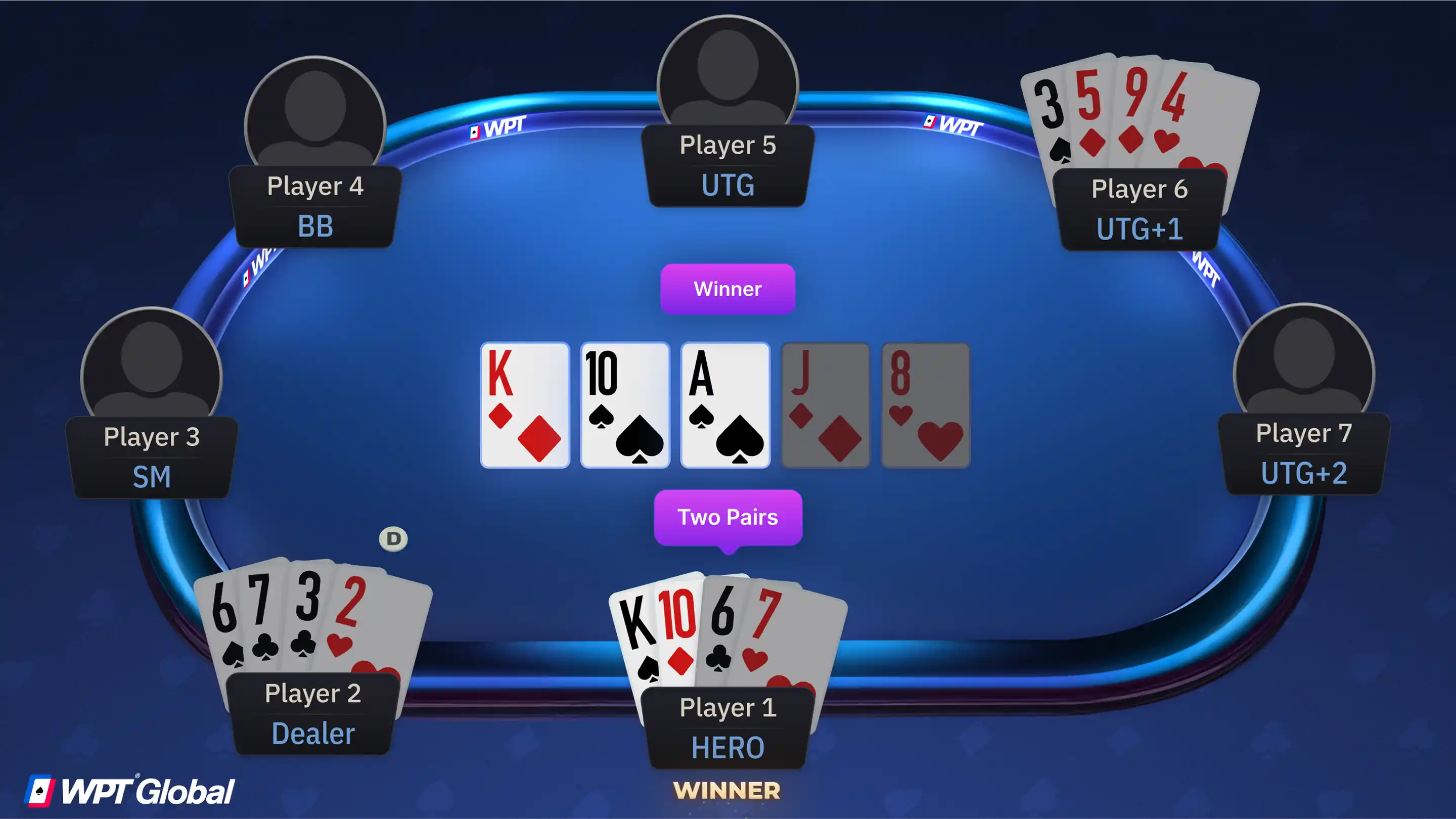
- Wining hand: You must use exactly two of your hole cards and three community cards to create your best five-card poker hand.
- Betting rounds: Four rounds of betting—pre-flop, flop, turn, and river—allow players to strategically build the pot or fold.
Key takeaway: Unlike Texas Hold'em, where players can use any combination of hole and community cards, Omaha requires you to use exactly two hole cards—a critical rule that new players often overlook.
Step-by-Step Guide: How an Omaha Poker Hand Plays Out
Here's a breakdown of the structure of an Omaha hand:
1. The Dealer Button & The Blinds
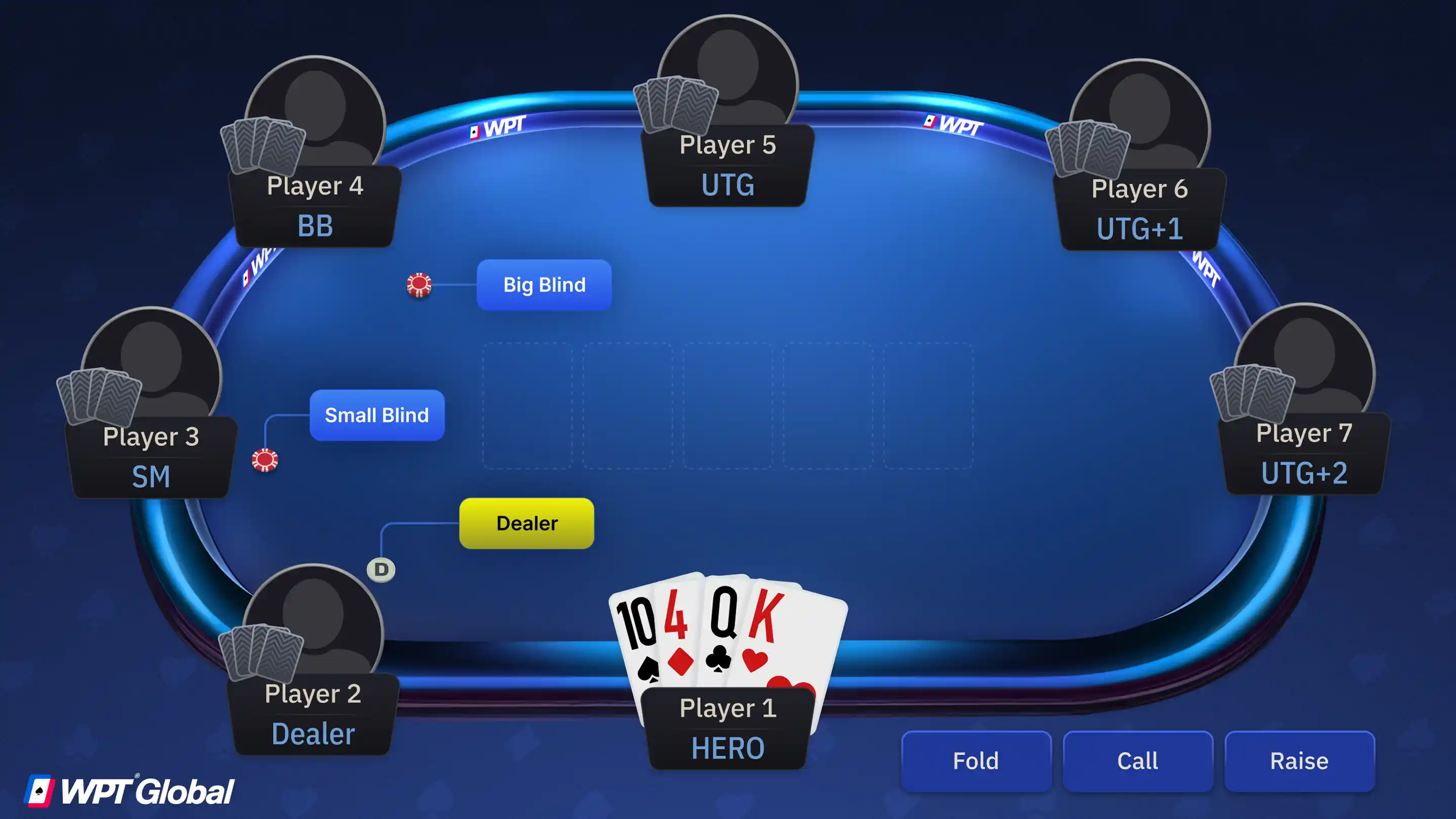
Every hand begins with the dealer button, a crucial marker that dictates the betting sequence and blind placement. After every hand, the button moves clockwise around the table. The player who holds it will act last in the postflop betting rounds.
Before any cards are dealt, the two players to the left of the dealer button post the blinds (forced bets). These initial bets guarantee a starting pot and establish the initial stakes.
The player immediately to the left of the dealer button posts the small blind. The player to their left posts the big blind, typically double the small blind's value.
2. The Preflop Round
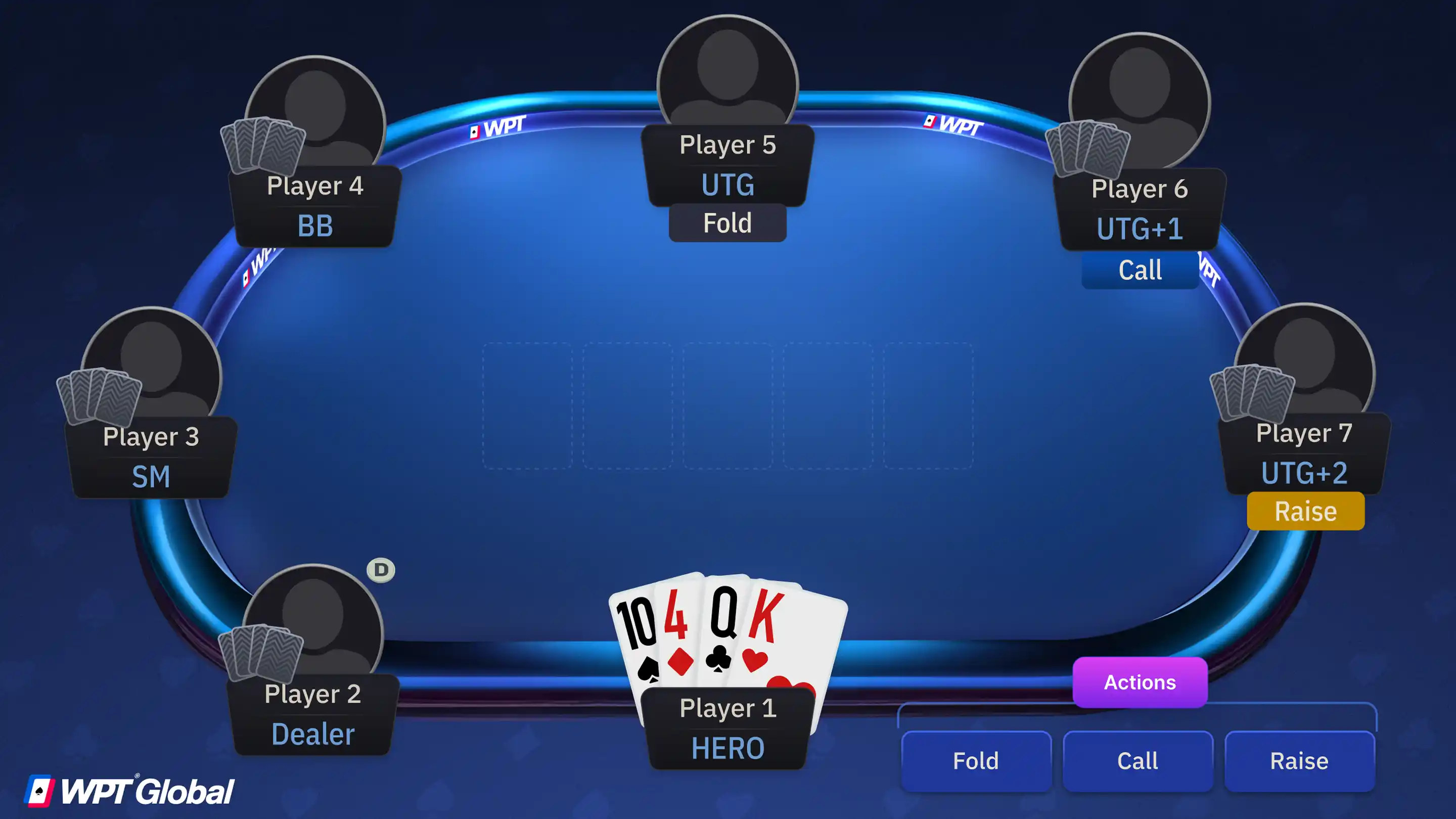
With the blinds posted, the preflop phase begins. Each player receives four private hole cards. Then, the player directly left of the big blind initiates the first betting round.
The action moves clockwise, and each player has the option to:
- Fold: Surrender the hand and forfeit any bets.
- Call: Match the current highest bet to remain in the hand.
- Raise: Increase the current bet, forcing subsequent players to call or re-raise.
3. The Flop (First Three Community Cards)
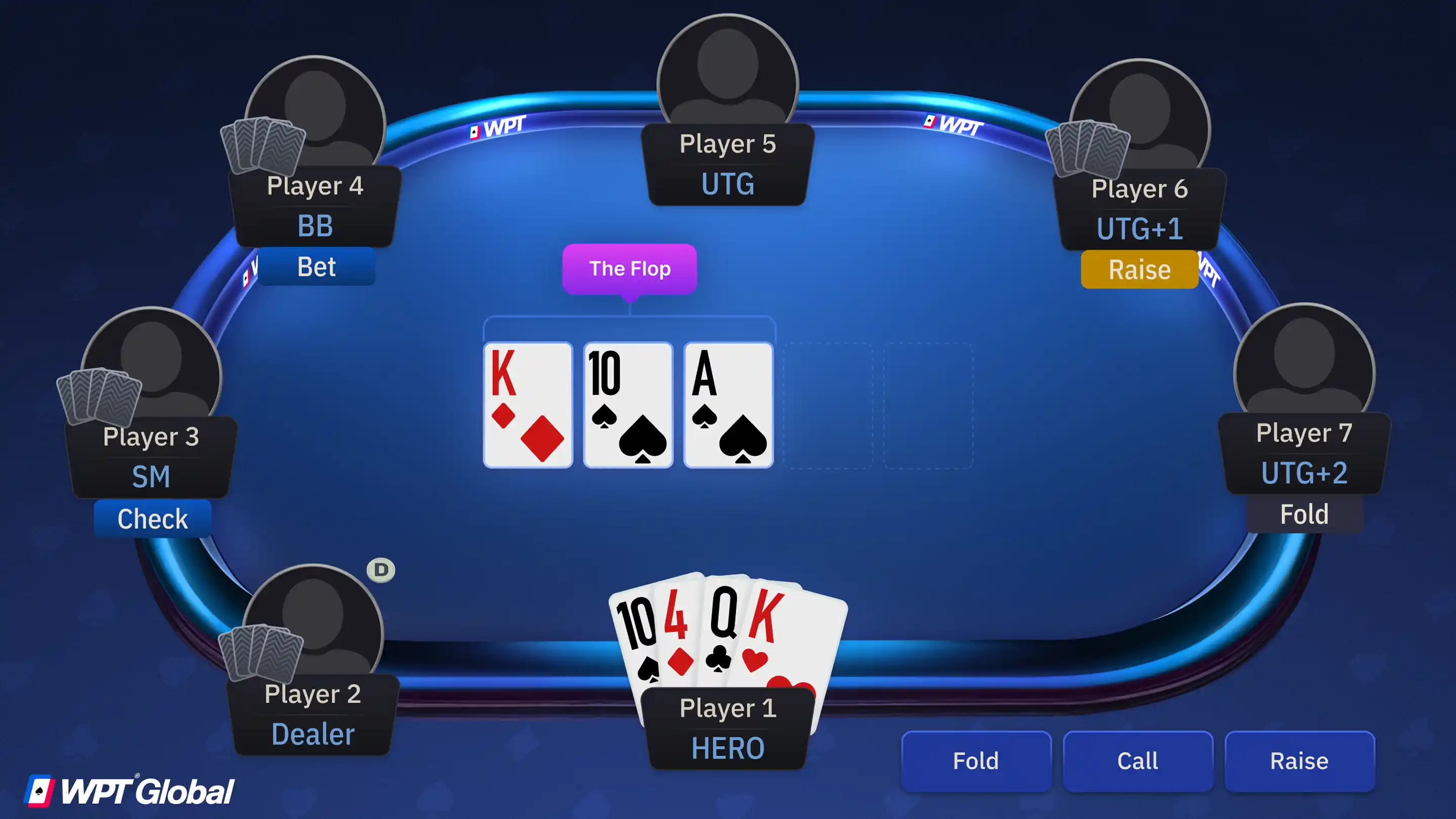
Next, three community cards are dealt face-up in the center of the table. The second betting round then commences with the first active player to the left of the button.
Players now have the following options:
- Check: Pass the action if no bet has been made, retaining the option to call or raise later in the round.
- Bet: Initiate a wager, forcing the following players to call or raise.
- Call: Match the current highest bet to remain in the hand.
- Raise: Increase the current bet, forcing subsequent players to call or re-raise.
- Fold: Surrender the hand and forfeit any bets.
4. The Turn (Fourth Community Card)
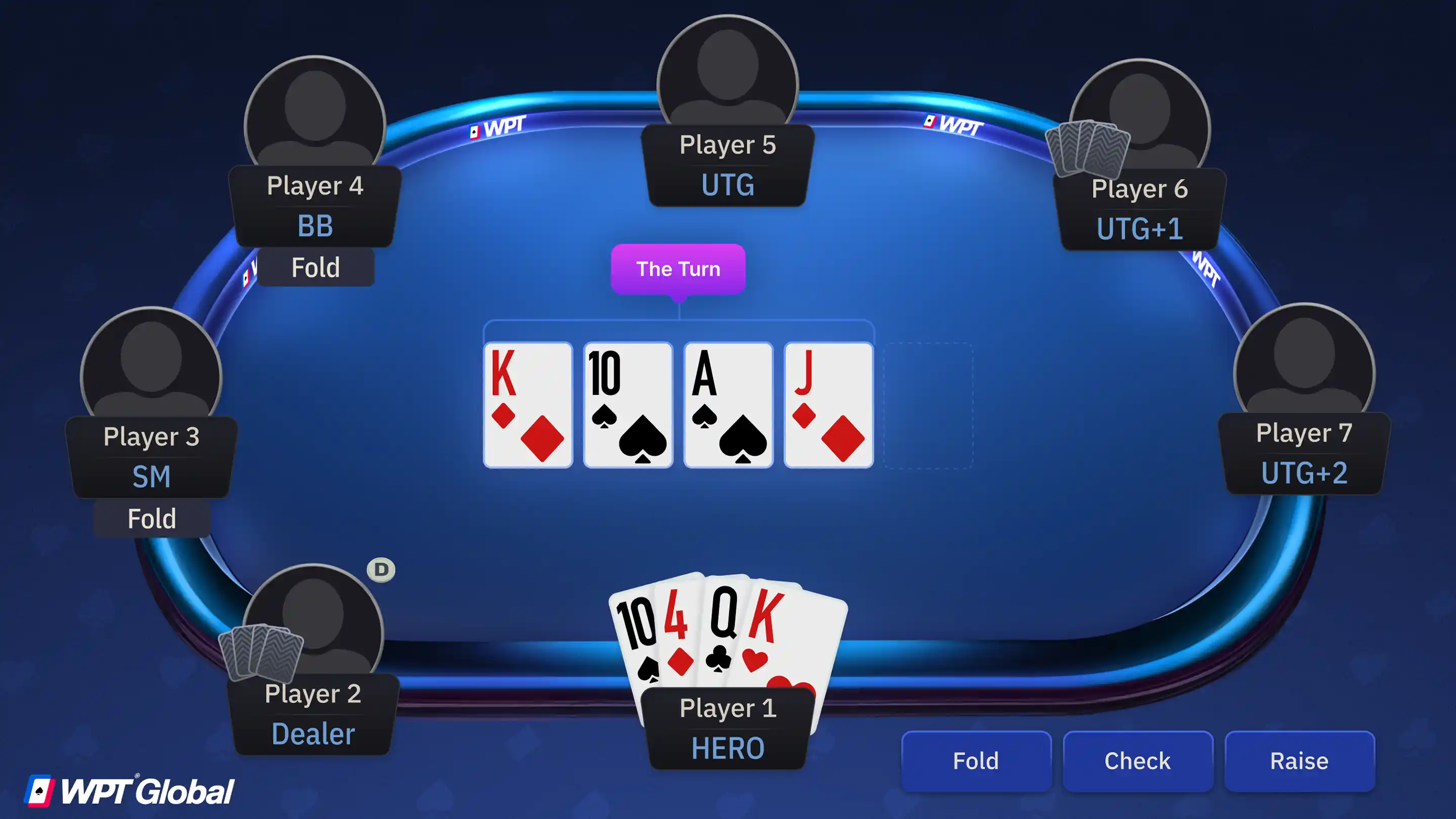
After the flop, a fourth community card is dealt face-up, further shaping your hand's potential. This initiates the third round of betting. Again, this starts with the first active player to the left of the dealer button.
5. The River (Fifth Community Card)
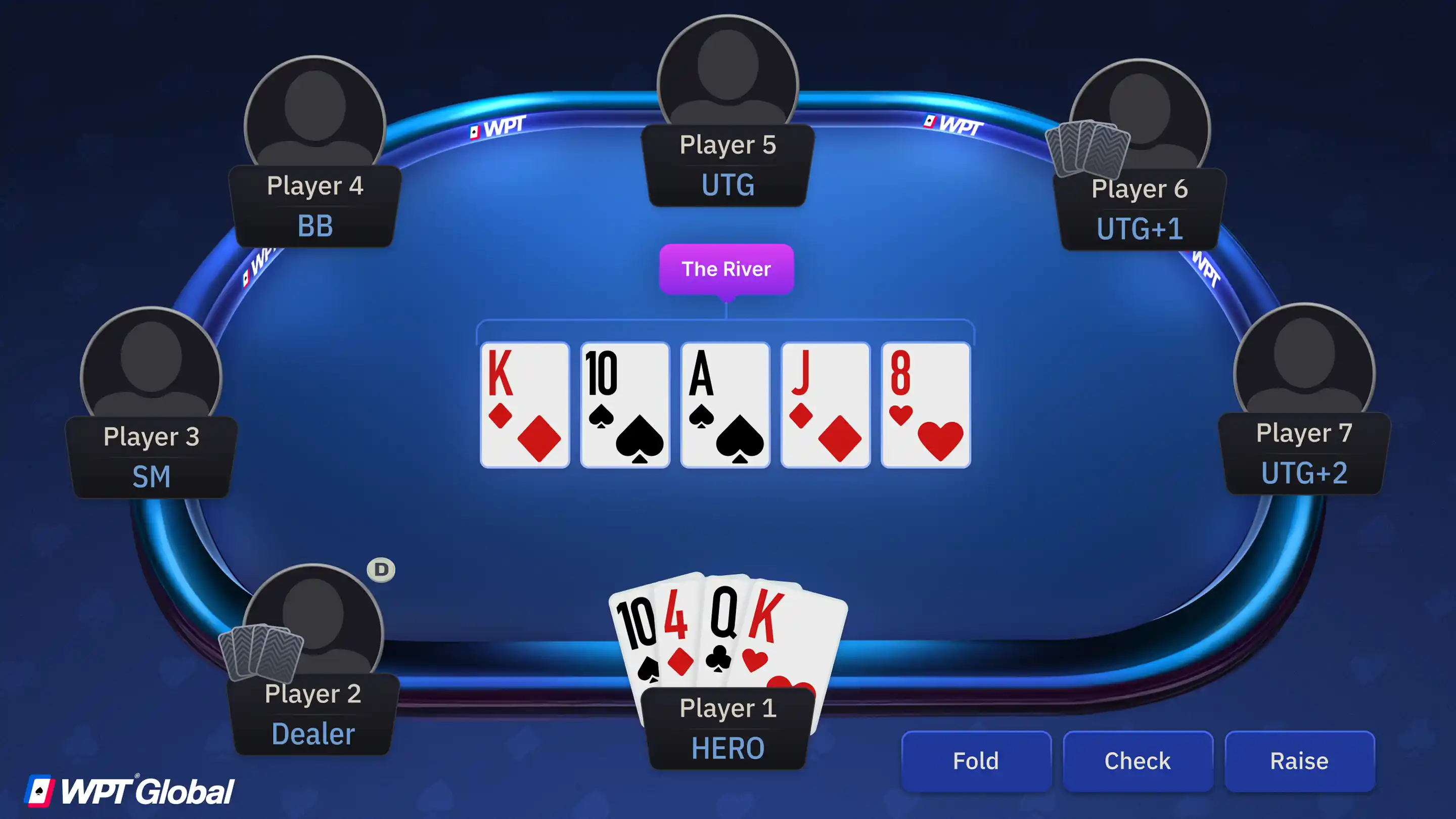
A fifth community card is dealt face-up, and the final betting round begins. As with the flop and turn, action begins with the first active player left of the dealer button.
6. The Showdown
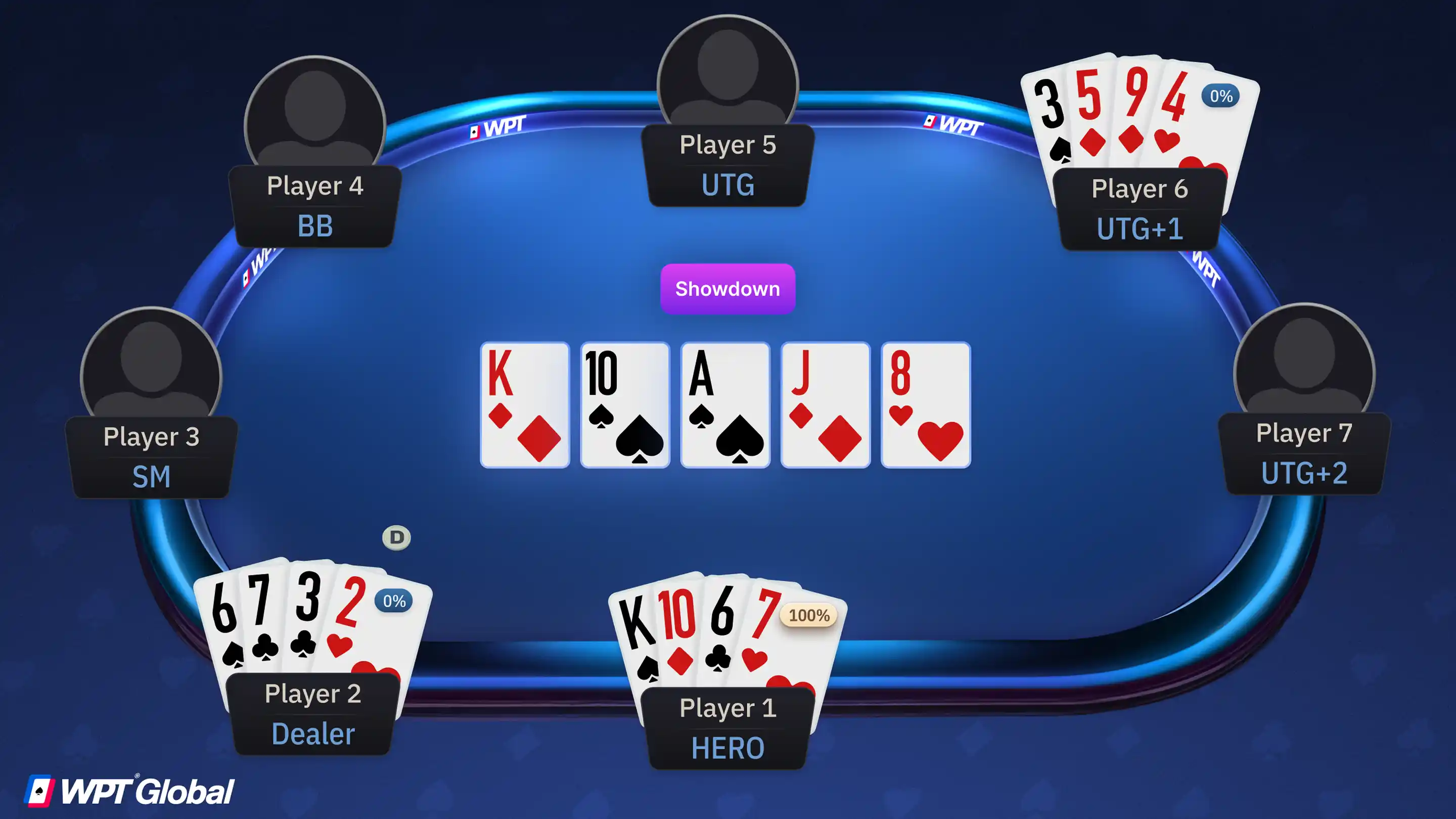
The showdown determines the pot's rightful owner. If, at any point, a single player remains after all others fold, they claim the pot unchallenged.
However, if two or more players remain after the final betting round, the hand is decided by a showdown. All remaining players reveal their five-card hands, and the one with the highest-ranking hand wins the pot.
Example Winning Hand: K♠ K♦ 10♠ 10♦ A♠ (Two Pair – Kings and Tens with an Ace kicker)
Omaha Hand Rankings
Omaha uses the standard rankings for poker hands. From highest to lowest, these are:
Rank Order | Hand Ranking | Example | Description |
|---|---|---|---|
1 | Royal Flush | 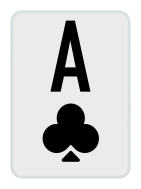 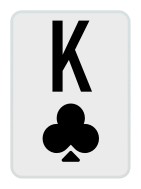 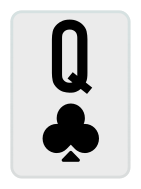 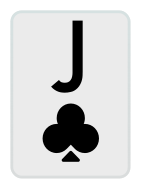 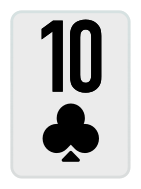 | Five cards of the same suit, ranked ace through ten. |
2 | Straight Flush | 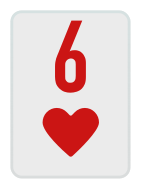 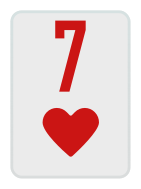 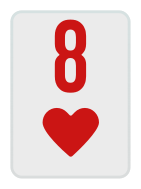 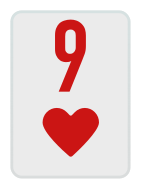 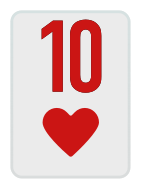 | Five cards of the same suit ranked sequentially. |
3 | Four of a Kind | 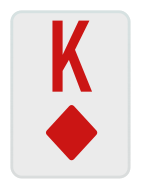 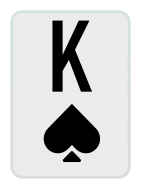 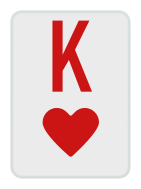 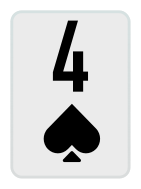 | Four cards of the same rank. |
4 | Full House | 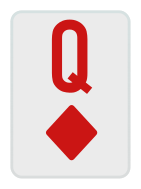 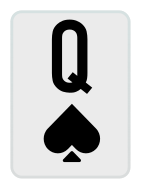 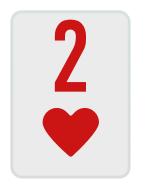 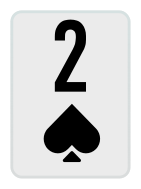 | Three cards of the same rank and two more cards of the same rank. |
5 | Flush | 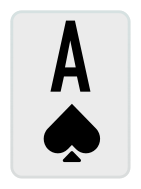 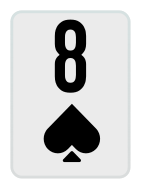 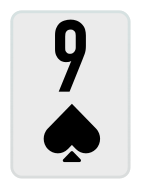 | Any five cards of the same suit. |
6 | Straight | 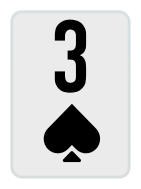 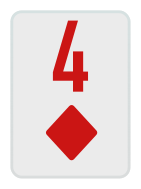 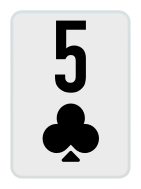 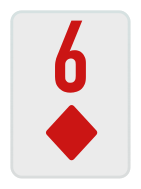 | Any five sequential cards, mixed suits. |
7 | Three of a Kind | 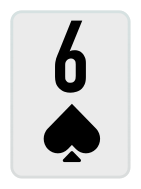 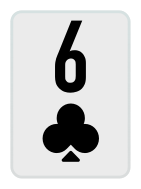  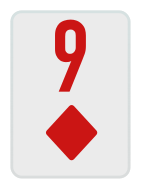 | Three matching cards. |
8 | Two Pair | 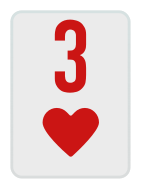 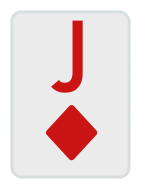 | Two cards of the same rank and two more cards of the same rank. |
9 | One Pair | 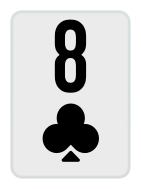 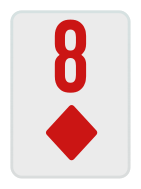 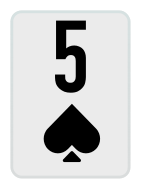 | Two cards of the same rank. |
10 | High Card | | Five unmatched cards. The highest card wins when no other hand is made |
It's important to note that in Omaha, suits aren't ranked. If two or more players have the same hand type (e.g. they have a flush), the hand with the highest cards wins. So, a flush with a King high beats a flush with a Queen high, no matter what suits are involved.
How Betting Works in Omaha
In the most popular Pot-Limit Omaha (PLO), the betting structure is defined by the current pot size. In other words, the maximum bet allowed is always equal to the total size of the pot at that moment.
It can be tricky for beginners to calculate pot-sized bets at first, but there's a simple method you can use:
- Add up the current pot and all bets on the table.
- Add the amount you need to call the current bet.
- The total of these three amounts is the maximum you can bet.
For example, let's say you wanted to raise a bet. The current pot is $20, and another opponent bets $10. So, you would need $10 to call the bet. When you add these three amounts together, you get $40, so in total is the maximum you can raise to is $50 (your $10 call + $40 raise).
How to Calculate a Pot-Limit Omaha Bet
Step | Calculation | Example |
|---|---|---|
1 | Add current pot size | Pot = $20 |
2 | Add all bets on the table | Opponent bets $10 (Pot = $30) |
3 | Add amount needed to call | Call = $10 (Pot = $40) |
4 | Max bet = Pot total | $50 max raise |
Omaha Poker Hand Real Example
Let’s break down a real example of an Omaha poker hand so you can see how the action unfolds.
Scenario:
You're playing in a $1/$2 Pot-Limit Omaha (PLO) cash game. You’re in the cutoff position (one seat before the dealer button) and are dealt: A♠ K♠ J♦ 10♦
This is a premium starting hand, as it includes suited and connected Broadway cards (Ace through Ten), giving you strong straight and flush possibilities.
1. The Preflop
- Action before you: A player in middle position raises to $6.
- Your move: With a strong starting hand, you 3-bet (re-raise) to $20.
- Action continues: The small blind calls, the big blind folds, and the original raiser also calls.
- Pot: $62
2. The Flop: Q♠ 9♦ 4♣
Board: Q♠ 9♦ 4♣
- The small blind checks, and the original raiser checks.
- You now have a huge straight draw (needing a 8, 10, Jack or King to complete your straight).
- You bet $40 to apply pressure.
- The small blind folds, but the original raiser calls.
- Pot: $142
3. The Turn: J♠
Board: Q♠ 9♦ 4♣ J♠
- This turn card gives you the nut straight (A-K-Q-J-10), plus the nut flush draw!
- Your opponent leads out with a $75 bet.
- You raise to $180 to build the pot.
- Your opponent calls.
- Pot: $502
4. The River: 2♠
Board: Q♠ 9♦ 4♣ J♠ 2♠
- The river brings a third spade, completing your flush.
- Your opponent goes all-in for $250.
- You call quickly with the nut flush.
- You call.
5. The Showdown
- Opponent reveals(a set of Queens)
- You win the pot with the nut flush (----
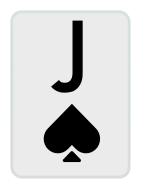 )!
)!
Final Pot: $1,002
This example highlights why Omaha is such an action-packed game—players frequently make strong hands, and the swings can be dramatic! In this hand, our opponent flopped the nuts, we turned the nuts, and rivered an even bigger nuts!
Omaha Poker Game Variations
One of the reasons Omaha is so popular is that there are a number of exciting formats you can play. While the core game remains consistent, betting structures and hand objectives can differ.
Here's a glimpse into the popular variations:
- Pot Limit Omaha (PLO): Betting is limited to the current size of the pot. In other words, the existing pot size, any current bets on the table, and the amount a player would need to call. Expect more calculated decisions and strategic positioning.
- No-Limit Omaha: Betting limits are removed, creating the ultimate game of high-risk, high-reward.
- Omaha Hi-Lo: The pot is split between the player with the best high hand and the one with the best qualifying low hand. This adds a unique layer of complexity.
- Five-Card Omaha: Players receive five hole cards instead of four. So, there's potential for more powerful hands.
- Six-Card Omaha: Players receive six hole cards instead of four. So, there's even more potential for even more powerful hands!
While each variation offers its own excitement, four-card PLO is the most widely played version. Therefore, this guide will primarily focus on equipping you with the skills to conquer the PLO tables.
Compare Omaha's game structure to other poker variants like Short Deck by reading our in-depth guide.
Variation | Betting Limits | Key Feature |
|---|---|---|
Pot-Limit Omaha | Max bet = Pot size | Most common format |
No-Limit Omaha | No bet limit | High-stakes action |
Omaha Hi-Lo | Split pot | Best high & low hands win |
Five-Card Omaha | Pot-Limit | Players get 5 hole cards |
Six-Card Omaha | Pot-Limit | Players get 6 hole cards |
Omaha Poker vs Texas Hold'em: Key Differences?
While Omaha and Texas Hold'em share many similarities, there are some crucial differences between them.
- Hole cards: Omaha deals four private cards, doubling Texas Hold'em's two.
- Two-card rule: In Omaha, you must use exactly two of your four hole cards, combined with three community cards. Texas Hold'em allows any five-card combination.
- Hand strength and volatility: With more hole cards, bigger hands are prevalent in Omaha. This leads to explosive pots and more possibilities, making every hand a potential game-changer.
Omaha Poker Strategy: Winning Tips
Once you've got the hang of the Omaha poker rules and structure, it's time to hit the tables.
Use these tips to craft a winning strategy:
- In Omaha, hand selection is crucial. Focus on hands that have multiple ways to make strong combinations. But, remember, you have to use two of your hole cards.
- Omaha poker is all about drawing "to the nuts". This means aiming for the best possible hand rather than second-best hands.
- Manage your bankroll (the total amount of money you have to play with). The nature of Omaha means there can be big swings, so it's important to play at stakes you can afford.
- Consider your position during each hand. If you're in a late position (closer to the dealer button), you can watch the actions of the other players and gather valuable information before it's your turn.
Common Omaha Mistakes To Avoid
To excel in Omaha poker, avoiding these common mistakes is crucial:
- Overvaluing single pair hands: Omaha hands tend to be very strong, meaning single pairs are rarely good enough to win at a showdown.
- Playing too many hands: Since everyone gets four hole cards, players are often tempted to play marginal hands (not great, but not the worst), which can lead to costly mistakes.
- Misreading your hand: Beginners often forget to use two hole cards and three community cards.
Online vs. Live Omaha: Key Differences
While Omaha’s core gameplay remains the same whether you’re playing online or in a live casino, there are major differences in pace, strategy, and player behavior.
Feature | Online Omaha | Live Omaha |
|---|---|---|
Speed | Faster, with automatic dealing and no manual shuffling. | Slower, with physical dealers and real-time decision-making. |
Multi-Tabling | Can play multiple games at once for higher volume. | Limited to one table at a time. |
Reads & Tells | No physical tells, so players rely on betting patterns. | Players can observe body language, expressions, and timing. |
Bluffing | More common but less effective due to data-driven decision-making. | More psychological play, as players rely on physical presence. |
Betting & Pots | Larger, more aggressive betting due to the ability to quickly reload or leave! | Generally more conservative play, especially in lower-stakes live games. |
If you enjoy fast-paced action and want to play multiple tables at once, online Omaha is the way to go. But if you love reading opponents, live table dynamics, and face-to-face mind games, live Omaha offers an entirely different challenge.