

















 Customer Dispute Resolution Page
 Help Center
 Affiliate Program






Play Anytime, Anywhere

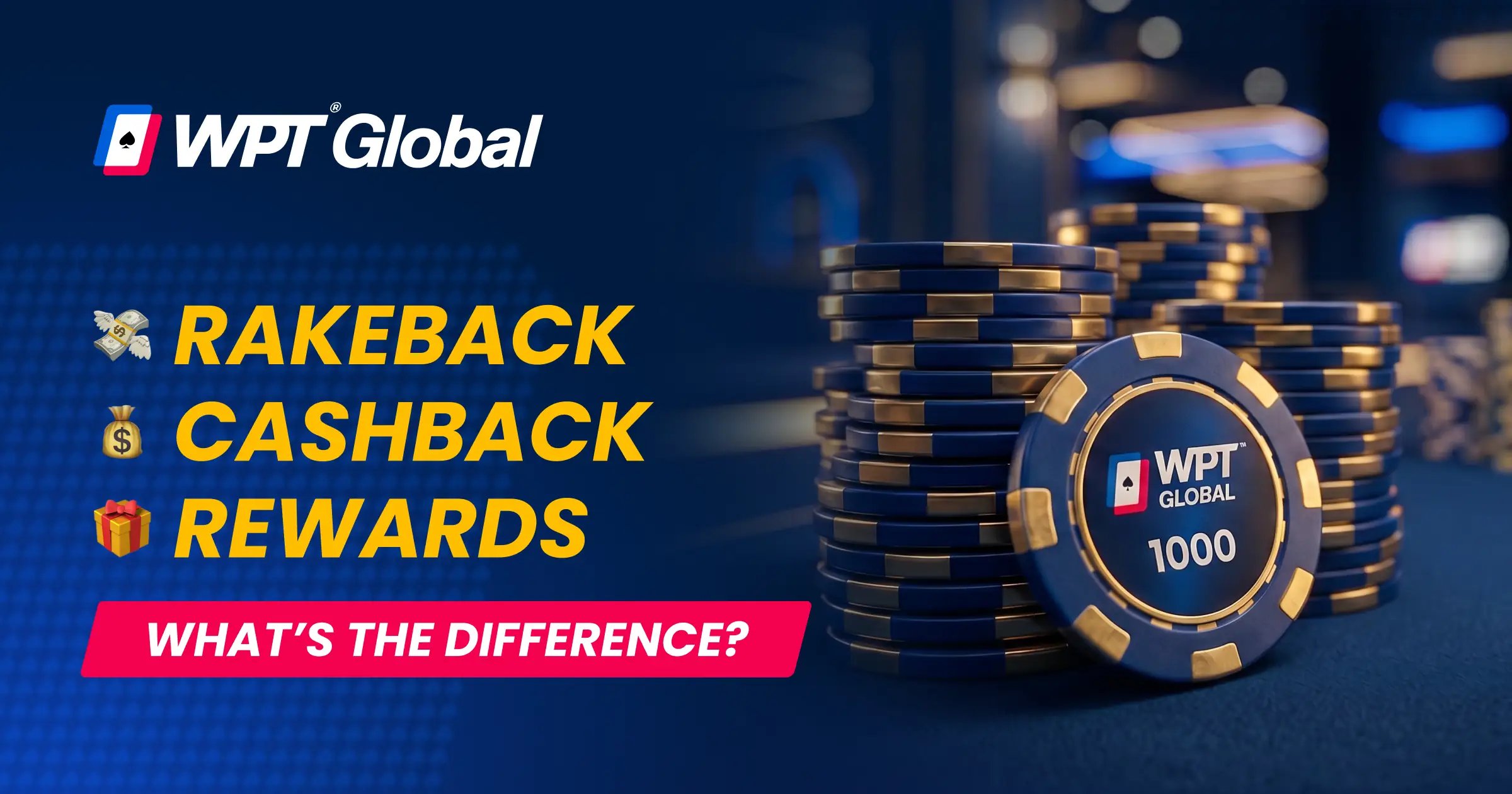
So, how do Rakeback, Cashback and Rewards in online poker actually work?
In 2026, that question is harder to answer than it used to be. A site might advertise rakeback, cashback, or rewards as if they all point to the same thing.
They do not. One may be a clean return on poker fees. Another may be a deposit-linked offer that only unlocks after enough play. A third may be a full loyalty system built around points, tickets, live-event credits, and perks that never become cash at all.
That is the real distinction. The smart comparison in 2026 is not just percentage versus percentage. It is cash versus non-cash, automatic versus conditional, and liquid value versus ecosystem value.
Why players mix these terms up
While confusion often happens, it is understandable as all three systems sit in the same broad category: value returned to the player.
The reason being, all three labels sit in the same broad territory: value returned to the player. So sites use them in overlapping ways, especially when they want a rewards page to feel simple.
From the player's point of view, that creates a problem. Two offers can both sound generous while working in completely different ways.
A flat weekly poker rebate feels very different from a welcome package that unlocks over time (let's say 60 days). A live-event credit feels very different from cash in an account. A promo balance that can only be redeemed inside one platform is another kettle of fish.
This is why it's worth considering. In 2026, the biggest mistake is not the specific percentage you choose. Instead, players often misunderstand what kind of value a site is actually returning.
What rakeback actually means
Rakeback is the cleanest term of the three.
In poker, rakeback is returning part of the rake paid in cash games or fees paid in tournaments back to the player. The cleaner the system, the easier it is to price. You play poker, generate rake, and get a defined part back.
However, “rakeback” systems are not always identical. Different sites calculate player contribution differently, which can materially change the real return.
A current clean example is WPT® Global’s table-starting cash-game offer. It pays rakeback to players who are among the first to start certain eligible cash tables, with payouts made on a weekly schedule, subject to terms.
WPT® Global’s PLO rakeback promotion is another clear example. Again, the language is direct. Poker play, poker volume, and a visible return tied to that action.
That is what rakeback should mean. It is the most precise label because it speaks directly to poker-generated cost coming back to the player.
Why cashback is a messier label
Cashback sounds simple. In practice, it is the fuzziest term of the three.
Sometimes cashback is a clean rebate. But in poker, it often means something broader: a welcome package, a deposit-linked return, or a bonus that becomes real only if the player generates enough play to unlock it.
WPT® Global’s welcome package is a good example. The headline is strong: 100% cashback up to $3,000. But the structure is conditional. The poker side unlocks through rake and tournament fees. The casino side unlocks through wagering. There is a time window to clear it. On top of that, the package can include MTT tickets, Global Spins tickets, and Casino Coin, subject to terms.
While this still brings great value, it's not the same thing as a flat ongoing rakeback.
At times, this can make players confused. A site can say cashback, and technically the label fits. But if the offer depends on clearing requirements, mixed-product play, or time-limited unlocks, it is already a very different product from a direct weekly poker rebate.
What “rewards” usually means in 2026
Rewards is the umbrella term.
In 2026, rewards can be a package that includes points, chests, tiers, tickets, live-event value, travel support, and partner perks. It is the least specific label, but also the one that best describes where the market has gone.
WPT® Global’s Passport Dollars are a clean example of rewards-as-access. You can use Passport Dollars toward live event entries and support for eligible festival expenses. They are useful, but they are not the same thing as withdrawable cash. They can also come with use-by rules and conversion mechanics, subject to terms.
This is what rewards often look like now. Not only money back, but value packaged as future poker, future travel, future access, or in-ecosystem credits.
The form of value matters more than the headline
If one thing is true, it's that all value is not the same.
Cash is cash. A direct poker rebate paid weekly is easy to understand. Tickets are not the same thing. Live-event credits are not the same thing. Promo balances restricted to in-platform use are not the same thing.
A rewards program can look huge because it bundles cashback, tickets, freerolls, and live credits into one big number. On paper, it may beat a simpler rakeback model. In practice, the simpler model may still be more valuable if the return is more direct, more liquid, and easier to use.
That is why headline value and realized value are often very different in 2026.
Why rewards are now built to shape behavior
Modern reward systems are not only about giving value back. They are also about steering player behavior.
WPT® Global’s table-starting rakeback offer rewards table starters. That is designed to encourage liquidity-building action.
Welcome cashback packages encourage players to stay active long enough to clear the value. Live credits and travel support push players toward specific festival routes. Tier systems reward sustained volume.
From the operator side, that is efficient. From the player side, it means “value” often comes with more friction and more conditions attached.
The three questions players should ask before chasing any offer
Is it cash, credit, or promo value?
This decides how usable the reward really is. Cash is the cleanest output. Credits, tickets, and promo value may still be useful, but only if the player actually wants what they can be spent on.
Is it automatic or unlocked?
A weekly poker rebate is very different from a welcome package that unlocks over time. The slower the unlock, the more the player needs to think about volume and time windows.
Can I use it outside this ecosystem?
This is where many modern systems lose value fast. A live credit or in-ecosystem promo balance may be valuable to the right player. It may be close to worthless to someone who wants flexibility.
The real difference is friction
Rakeback is the clearest because the friction is lowest. Play poker, generate fees, get a defined return.
Cashback usually has more friction. It may depend on a deposit, a time window, unlock rules, or mixed-product play before it turns into real value.
Rewards usually have the most friction.
Why is this? Well, rewards often come in packages with tiers, points, tickets, live credits, partner perks, or behavior incentives. With all of this bundled together, it only makes full sense inside one ecosystem.
That does not make rewards bad. Often it means the best system is not always the one with the biggest headline number. It can also be the one with the least distance between your action and usable value.
Here's a clean approach to separate these terms in 2026:
Rakeback is the clearest poker-fee return. Cashback is the broader, fuzzier marketing label. Rewards is the full loyalty package that can include cash, points, tickets, credits, live-event value, and perks.