















 Customer Dispute Resolution Page
 Help Center
 Affiliate Program




Quick-Start: Texas Hold’em in 5 Minutes
Are you short on time? Here’s a quick breakdown of how Texas Hold’em works:
- Each player gets two private cards (hole cards).
- Five community cards are dealt face-up (used by all players).
- Players bet across four rounds:
Pre-Flop: After receiving hole cards
Flop: After the first three community cards
Turn: After the fourth community card
River: After the final community card - Make the best five-card hand using any combination of your two hole cards and the five community cards.
- You can win by having the best hand at showdown or forcing all opponents to fold before the final betting round.
Want a deeper understanding? Let’s break it down step by step!
Texas Hold’em Poker: The Basics
The objective of Texas Hold'em
In Texas Hold'em, the aim is to create the best five-card hand. You use two cards that are dealt only to you, plus five cards that are shared by everyone at the table (community cards).
The objective of the game is straightforward, and you can win in one of two ways:
- Have the best hand at the end: The strongest combination of five cards you can make using your two private cards and the five community cards
- Make the other players think you have the best hand, so they give up (fold)
The beauty of Texas Hold'em lies in its accessibility. While the rules are simple enough for beginners, the strategy that unfolds at the table keeps even the most experienced players engaged.
The Game Setup
The basic setup for Texas Hold'em is:
- Players: 2 to 10 players
- Deck: A standard 52-card deck
- Chips: Used for betting
Texas Hold'em Poker: How to Play & Betting Rounds
Texas Hold'em is played in rounds, with multiple stages of betting and card dealing.
1. Preflop: The Dealer Button, the Blinds & the Hole Cards (First Betting Round)
Each hand begins with the placement of the dealer button, a round disc that moves clockwise around the table after every hand. It shows the player who bets last, ensuring everyone gets a turn to go last.
Before you get your cards, two players to the left of the dealer must post forced bets, known as the blinds:
- Small blind: The player to the left of the dealer button puts in a small amount.
- Big blind: The player to the left of the small blind puts in a larger amount (usually double the small blind).
Once blinds are placed, each player receives two private cards known as the hole cards.

2. The Flop - First Three Community Cards (Second Betting Round)
The dealer places three community cards face-up in the centre of the table. Now, you can start to see what kind of hand you might be able to make.
Another betting round follows.

3. The Turn - Fourth Community Card (Third Betting Round)
Next, the fourth community card is flipped over, and it can dramatically change the dynamics of your hand.
Another betting round follows.

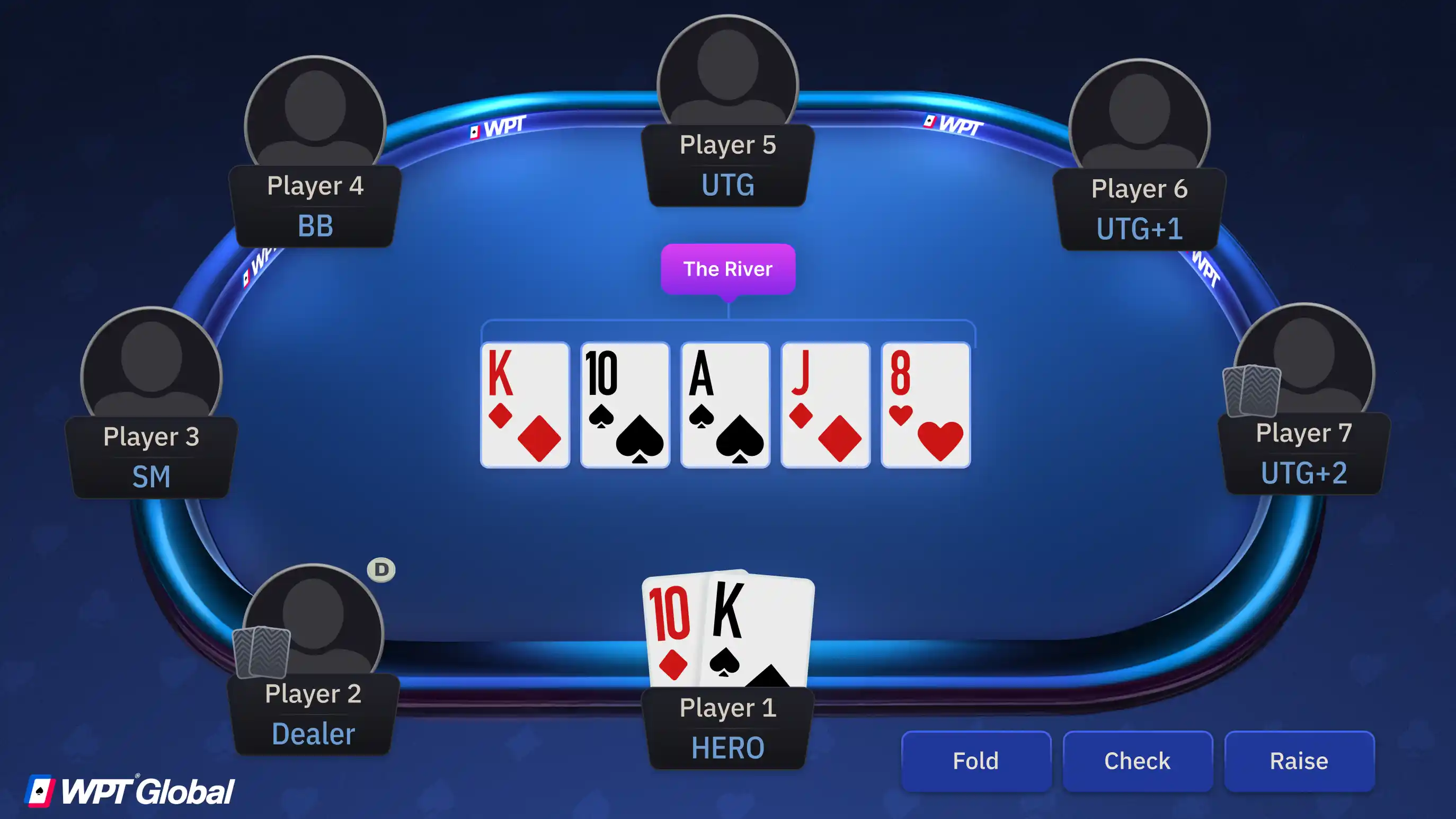
4. The River - Fifth Community Card (Fourth & Final Betting Round)
Finally, the fifth community card is flipped over. It's the last piece of information you receive before the final betting round and potential showdown.
Another betting round follows.
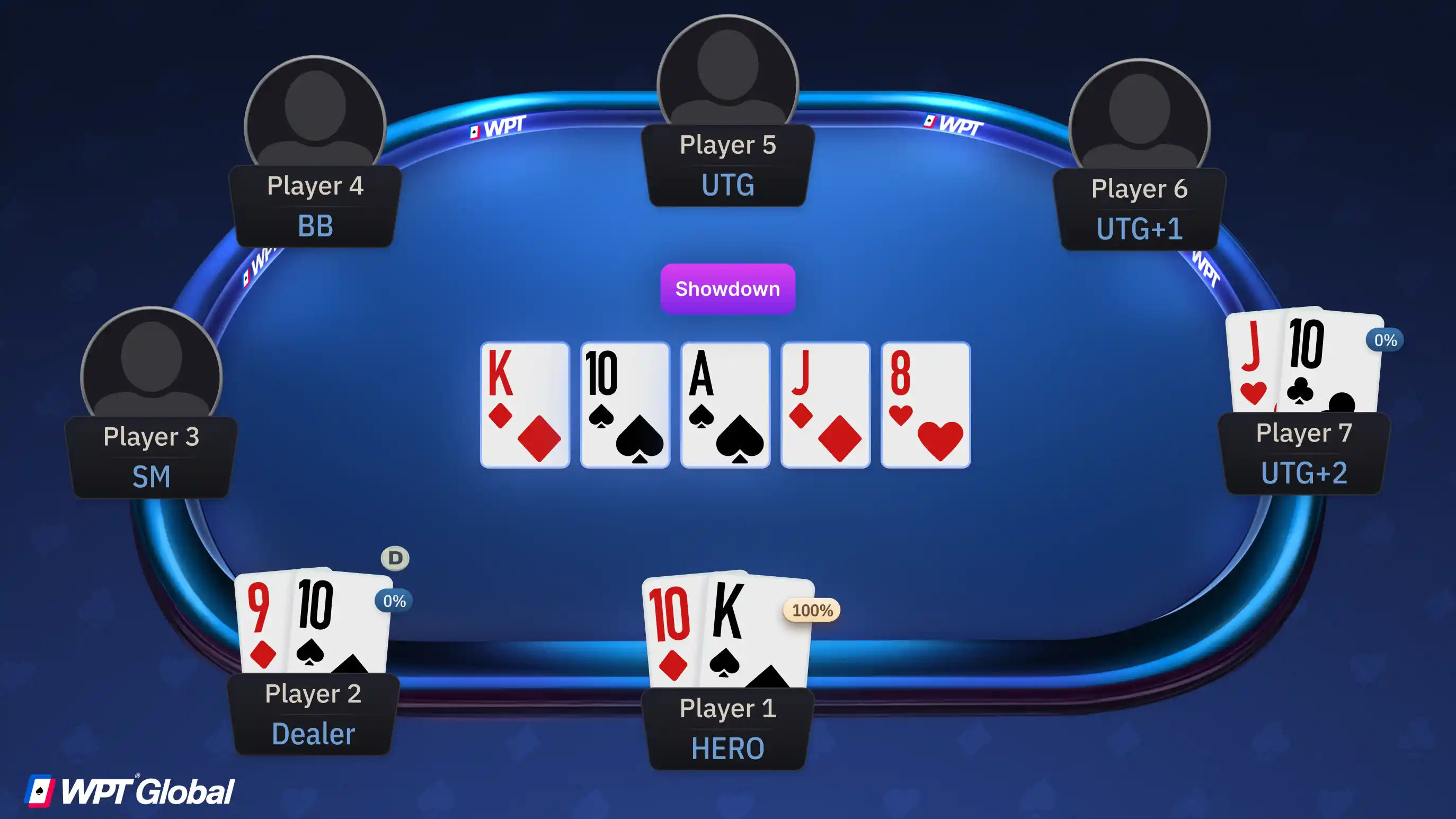
5. The Showdown - Who Wins the Hand?
After the final betting round, the winner is determined in one of two ways:
- Winning at Showdown: Players reveal their hands, and the strongest hand wins the pot. If two or more players have exactly the same winning hands, they split the pot equally.
- Winning Without a Showdown: If all but one player folds, the last remaining player wins the pot automatically—without revealing their cards.
This is one of the most exciting moments in Texas Hold’em, as players find out if their reads and strategies have paid off.
Note: A hand can end before the showdown if players fold. Otherwise, the best hand at the showdown wins!
Summary of Betting Actions
During any betting rounds we analyzed above, you have several options that form the backbone of your poker strategy:
- Fold - Surrender your hand and forfeit any chance of winning the pot.
- Check - Pass the action to the next player without betting (only if no bet has been made).
- Call - Match the current bet to stay in the hand.
- Raise - Increase the current bet, forcing other players to match it or fold.
- All-In - Bet all your remaining chips.
Texas Hold'em Poker Hand Rankings
Understanding hand rankings is crucial for Texas Hold'em poker. From highest to lowest, the rankings are:
Rank Order | Hand Ranking | Example | Description |
|---|---|---|---|
1 | Royal Flush | 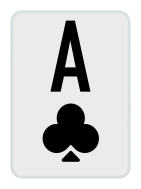 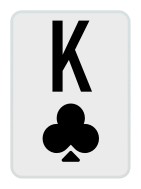 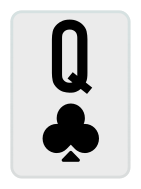 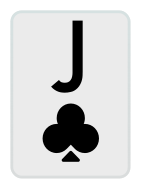 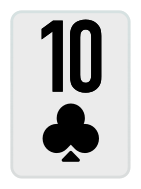 | Five cards of the same suit, ranked ace through ten. |
2 | Straight Flush | 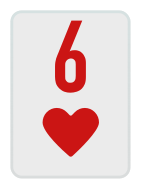  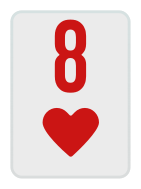 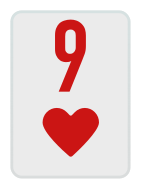  | Five cards of the same suit ranked sequentially. |
3 | Four of a Kind | 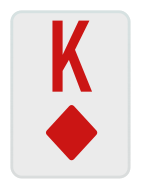 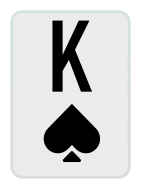  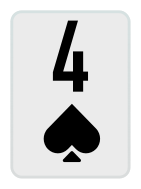 | Four cards of the same rank. |
4 | Full House | 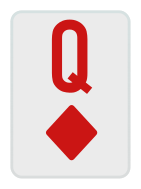 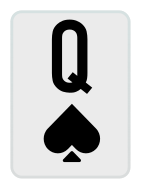 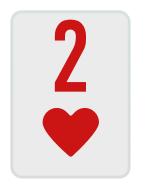 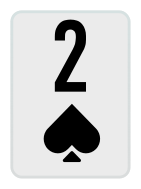 | Three cards of the same rank and two more cards of the same rank. |
5 | Flush | 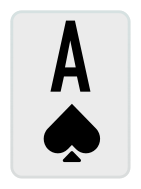 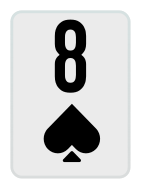 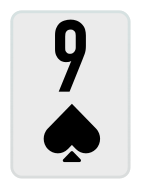 | Any five cards of the same suit. |
6 | Straight | 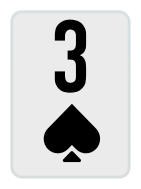 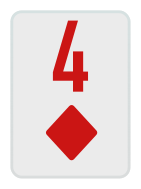 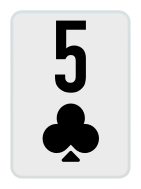 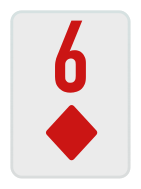 | Any five sequential cards, mixed suits. |
7 | Three of a Kind | 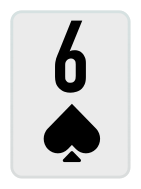 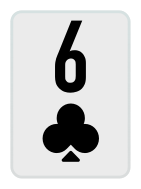  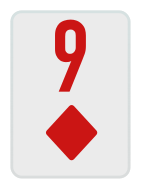 | Three matching cards. |
8 | Two Pair | 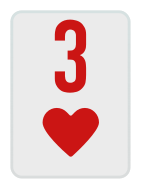 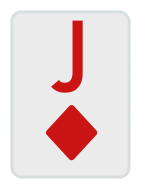 | Two cards of the same rank and two more cards of the same rank. |
9 | One Pair | 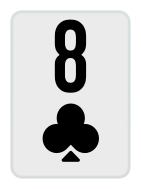 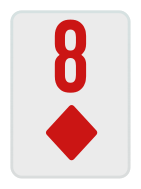 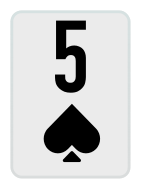 | Two cards of the same rank. |
10 | High Card | | Five unmatched cards. |
It's important to note that in Texas Hold'em, suits aren't ranked. If two players have the same hand type (e.g. they both have a flush), the hand with the highest cards wins. So, a flush with a King high beats a flush with a Queen high, no matter what suits are involved.
If you're ready to explore other types of poker, check out our comprehensive guide on how to play Omaha.
Texas Hold'em Hand Real Example
Let’s walk through a real example of a Texas Hold’em hand to see how the action unfolds.
Scenario:
You’re playing in a $1/$2 No-Limit Texas Hold’em cash game. You’re in the cutoff position (one seat before the dealer button), holding A♠ K♠—a premium starting hand.
1. Preflop
- Action before you: A player in middle position raises to $6.
- Your move: You have a strong hand (Ace-King suited) and decide to re-raise (3-bet) to $18.
- Action continues: The small blind calls, and the original raiser also calls.
- Pot: $56
2. The Flop: 10♠ J♠ 3♦
- The small blind checks, and the original raiser checks.
- You have a flush draw (four spades) and a gutshot straight draw (needing a Queen for a straight).
- You bet $30 to apply pressure.
- The small blind folds, but the original raiser calls.
- Pot: $116
3. The Turn: Q♥
- You hit the nut straight! (A-K-Q-J-10)
- The original raiser bets $50 into you.
- You raise to $120 to build the pot.
- The original raiser calls.
- Pot: $356
4. The River: 2♠
- You now have the nut flush (A-high flush) on top of your straight.
- The original raiser goes all-in for $200.
- With the best possible hand, you snap-call.
5. Showdown
- Opponent reveals(two pair – Queens and Jacks).
- You win the pot with an Ace-high flush!
Key takeaways from this hand:
This is a classic example of how strong starting hands, good betting strategy, and position can help you maximize your winnings in Texas Hold’em.
Texas Hold'em Variations
No-Limit Texas Hold'em is definitely the most popular variant. Still, there are other versions that provide just as much of a thrill:
- No-Limit: Players can bet any amount, up to their entire stack, at any time.
- Fixed-Limit: Betting and raising are limited to predetermined amounts.
- Pot-Limit: The maximum bet is the current size of the pot.
- Short Deck: Want more action and less cards in the deck? Short Deck is your game—dive into our comprehensive guide to learn more.
Texas Hold'em: Beginner Strategy Guide
Texas Hold'em poker is an easy game to learn, but the real challenge is making smart decisions and avoiding rookie mistakes.
Here’s a simple yet effective strategy guide to help you build a solid foundation.
1. Play Tight, But Aggressive
When starting out, play your premium hands like Aces, Kings, Queens, and Ace-King, and fold your weaker ones. When you play, play aggressively—raising rather than just calling—to apply pressure and take control of the pot. This disciplined approach mitigates risk and builds a solid foundation for future success.
2. Position is Power
Where you sit at the table matters. Being in a late position (closer to the dealer button) lets you see how others act before you make a move. This gives you an information advantage, allowing you to bet or fold more strategically.
3. Know When to Fold
Just like Kenny Rogers sang in The Gambler, not every hand is worth playing. If the flop doesn’t improve your hand and your opponent is betting aggressively, don’t be afraid to fold. Good players fold more often than they play.
4. Avoid Chasing Draws Without Good Odds
If you need one more card to complete a straight or flush, make sure the pot odds justify calling a bet. If the cost is too high compared to the potential reward, it’s better to fold.
How to Calculate Your Odds
An "out" is any card that improves your hand. The more outs you have, the higher your chance of hitting a strong hand.
Drawing Hand | Outs | Odds to Improve (Flop to River) | Odds to Improve (Turn to River) |
|---|---|---|---|
Flush Draw (4 suited cards) | 9 | ~36% | ~18% |
Open-Ended Straight Draw (e.g. 6-7-8-9) | 8 | ~32% | ~16% |
Inside Straight Draw (e.g. 6-8-9-10 needs a 7) | 4 | ~16% | ~8% |
One Pair to Two Pair/Three of a Kind | 5 | ~20% | ~10% |
Tip: If your hand has a less than 20% chance to improve, but your opponent bets half the pot or more, folding is usually the best move.
5. Don’t Bluff Just for the Sake of It
Bluffing is an advanced skill. Beginners often think they need to bluff frequently, but it’s best used sparingly and against the right opponents. If you're playing against a table of beginners who call everything, bluffing won’t work.
6. More Common Beginner Mistakes to Avoid
- Playing Too Many Hands (Getting Too Excited!) – Be selective! Weak hands lose money.
- Overvaluing Medium Hands - Always consider what stronger hands your opponent could have.
- Not Paying Attention to Betting Patterns - Read your opponents and don't focus only on your own cards.
Understanding Pot Odds: Should You Call, Raise, or Fold?
The pot odds will help you decide if calling a bet is mathematically profitable for your hand. The formula you should use is: Pot Odds (%) = (Current Pot / Cost to Call) × 100.
Once you’ve calculated your outs, compare your chances of hitting one to the pot odds. If your odds of improving are lower than the pot odds, calling isn't profitable in the long run.
However, if both you and your opponent have chips left and you expect more betting when you hit your hand, implied odds could justify a call.