











 Customer Dispute Resolution Page
 Help Center
 Affiliate Program


Understanding Poker Hand Rankings
To play poker like a pro (or at least avoid embarrassing yourself at the table), you need to understand hand rankings inside out.
So, what’s the ultimate hand? And where do the others fall in line?
What is the Best Hand in Poker?
- The best possible hand in poker is a Royal Flush—a stunning combination of(all in the same suit).
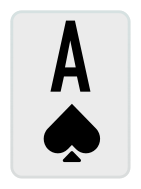
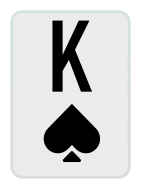
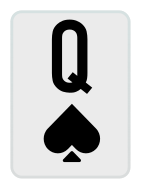
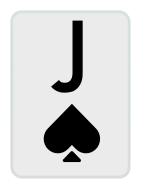
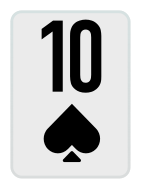
Why is it the best?
- It's unbeatable. No other hand outranks a Royal Flush.
- It's incredibly rare. The odds of hitting one? 1 in 30,939 hands!
- It's the dream. Every poker player hopes to land this hand at least once in their lifetime.
But while a Royal Flush is poker’s holy grail, plenty of other hands can still win big pots—if you know how to play them.
Poker Hand Categories
Every poker hand falls into one of 10 ranked categories—from the ultimate Royal Flush to the lowest High Card.
Here’s how it works:
- The higher-ranked the hand, the stronger it is in a showdown.
- The more unlikely a hand is, the more powerful it is.
- If two players have the same type of hand, the highest-ranking card wins.
Next, let’s rank every poker hand from strongest to weakest, so you’ll always know where you stand in a showdown.
Poker Hands Ranked (Strongest to Weakest)
1. Royal Flush
- Example:(all the same suit)
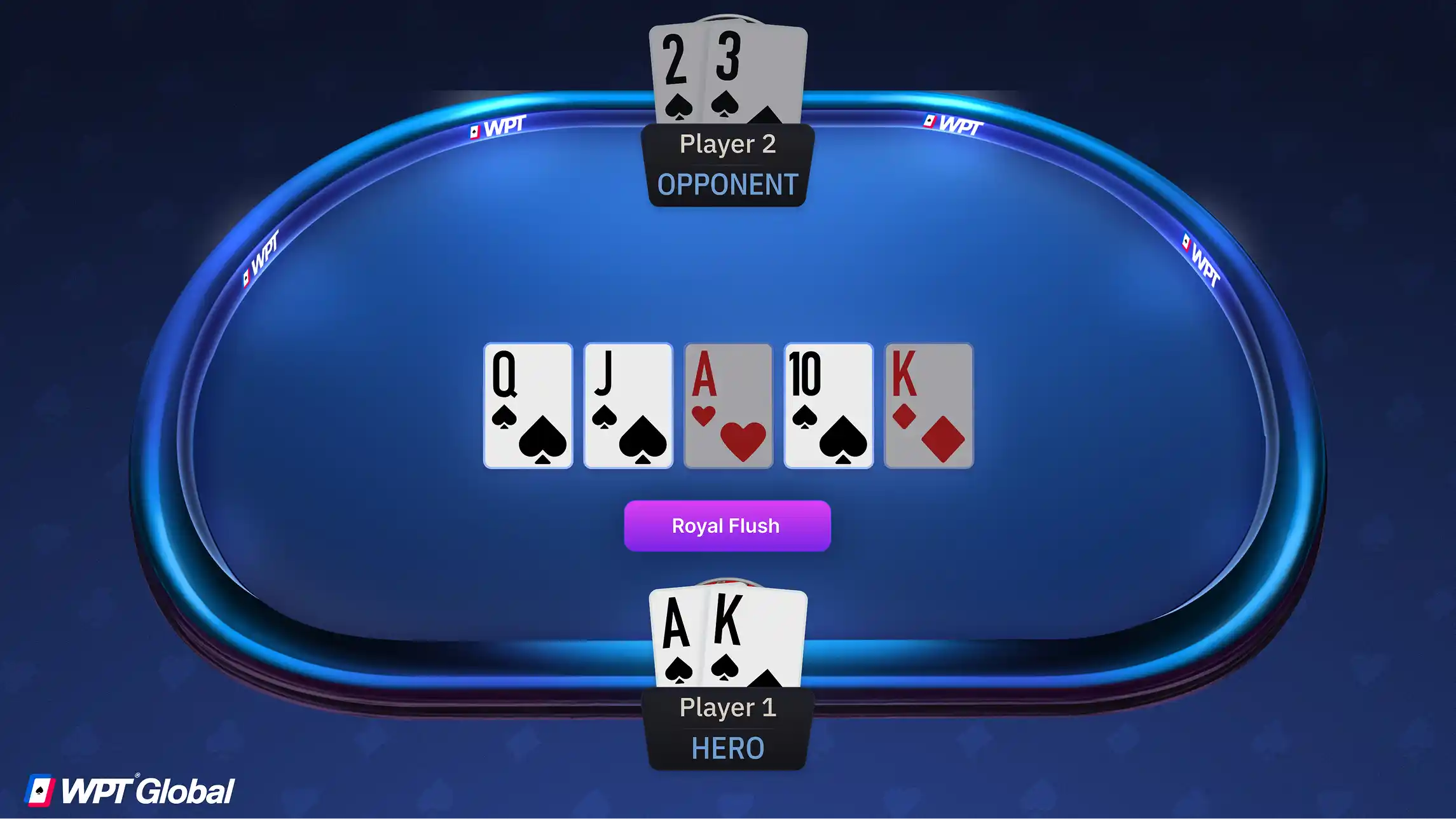
Unbeatable. If you hit this, the pot is yours—no exceptions.
Odds of hitting it: 1 in 30,939 hands
A Royal Flush is the absolute best hand in poker—a straight from 10 to Ace, all in the same suit. It’s legendary, incredibly rare, and the dream of every poker player.
2. Straight Flush – Five in a Row, Same Suit
- Example:
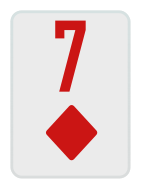
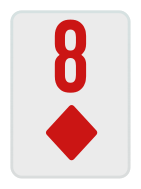
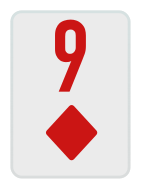
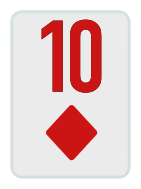
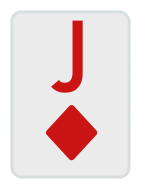
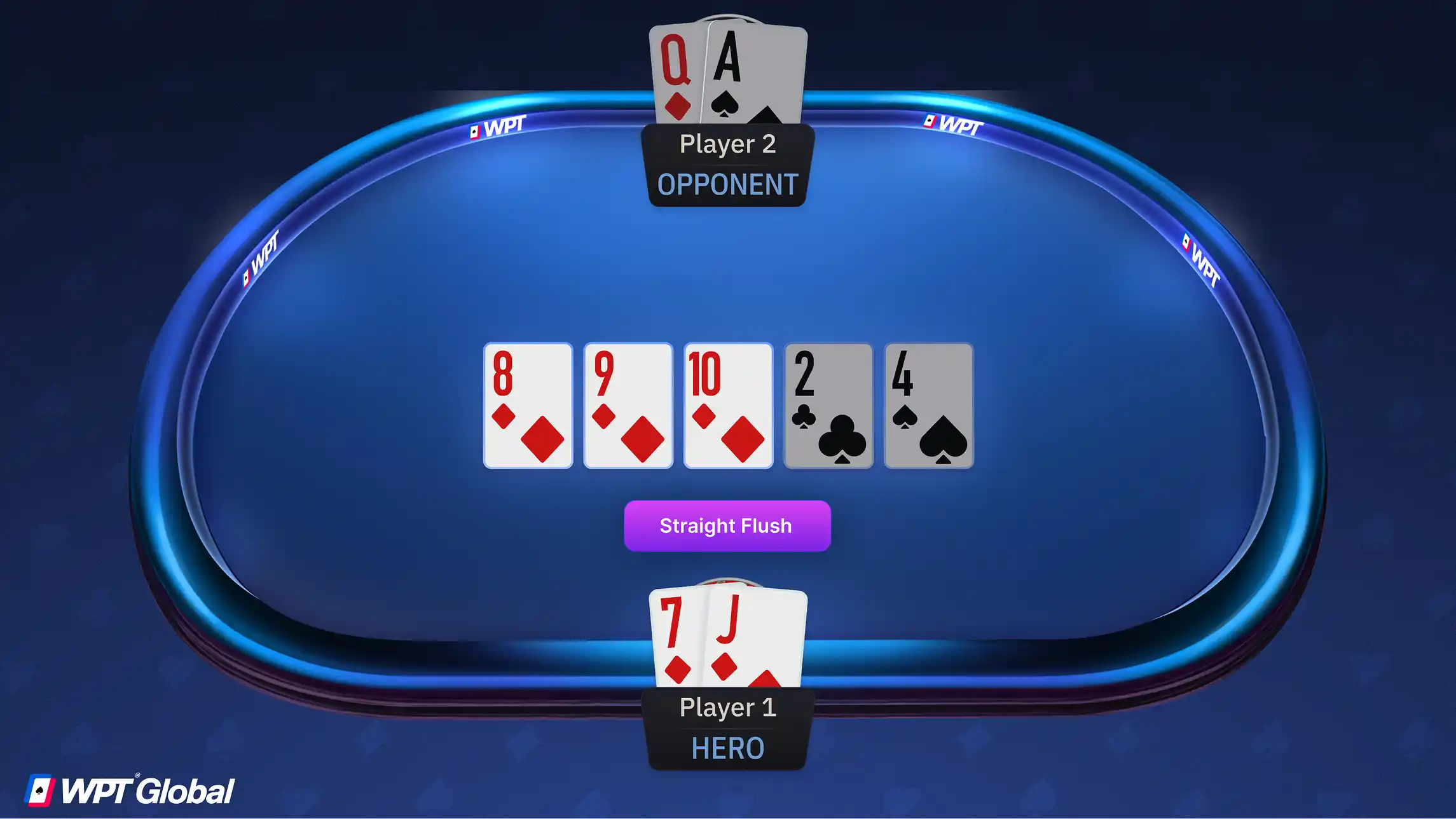
Only beaten by a Royal Flush.
Odds of hitting it: 1 in 3,589.6 hands
A Straight Flush is five consecutive cards of the same suit. If two players have one, the higher sequence wins.
The highest possible Straight Flush is a Royal Flush—but any five-card straight in the same suit is still an absolutely incredible hand to hold.
3. Four-of-a-Kind
- Example:

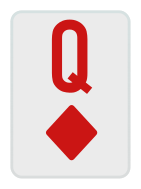
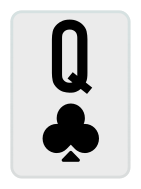
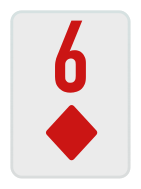
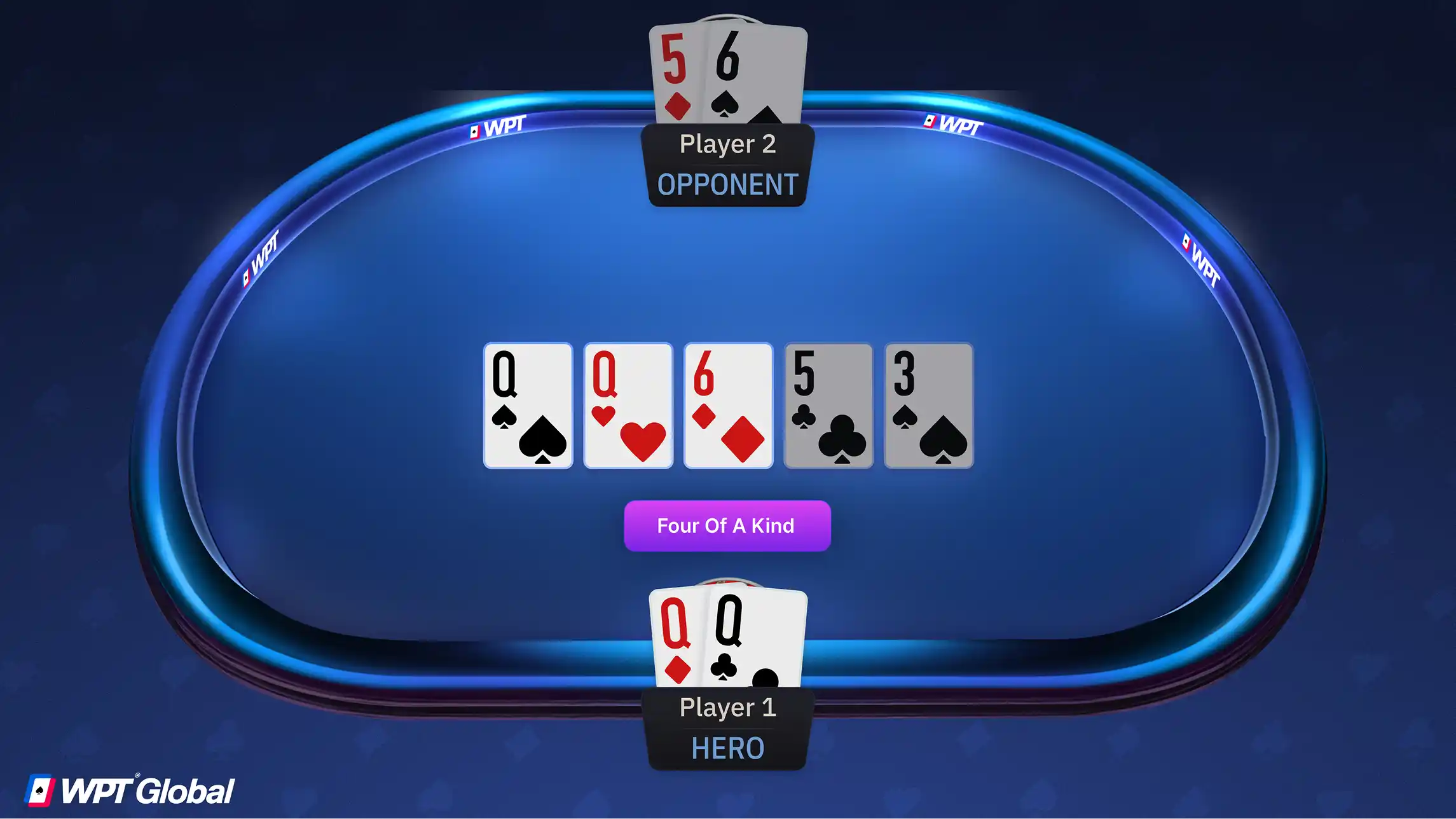
A nearly unbeatable hand—just below a Straight Flush.
Odds of hitting it: 1 in 594 hands
Four-of-a-Kind (also called quads) means having four matching cards of the same rank. In the event of a tie, i.e. if two players have quads, the higher-ranked four wins. If they’re the same, the kicker (side card) decides.
Four-of-a-Kind is a very strong hand and can only be beaten by a royal flush or a straight flush.
4. Full House - A Set + A Pair
- Example:
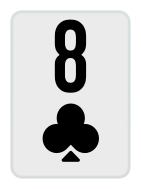
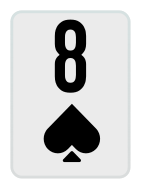
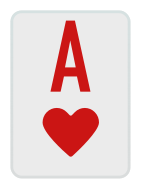
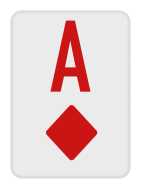
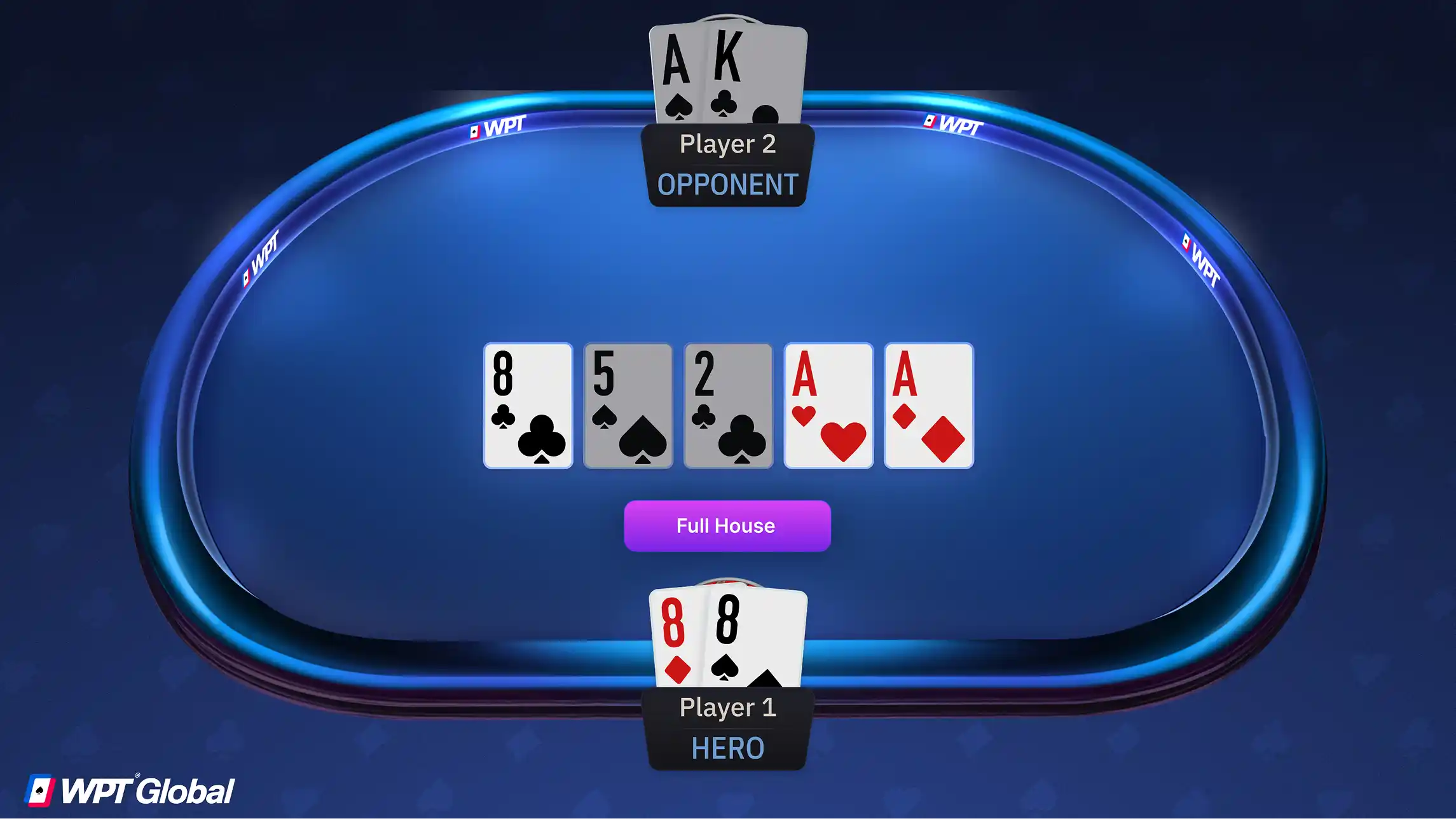
Beats a flush but loses to four of a kind.
Odds of hitting it: 1 in 37.5 hands
A Full House is made of three-of-a-kind + a pair. If two players have one, the stronger three-of-a-kind wins.
A Full House beats a flush, with the odds of having a full house being slightly less than a flush.
5. Flush - Five of the Same Suit
- Example:
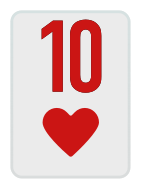
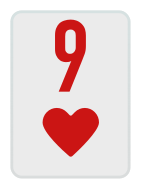
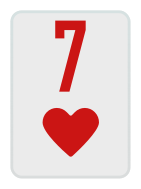
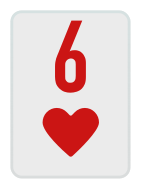
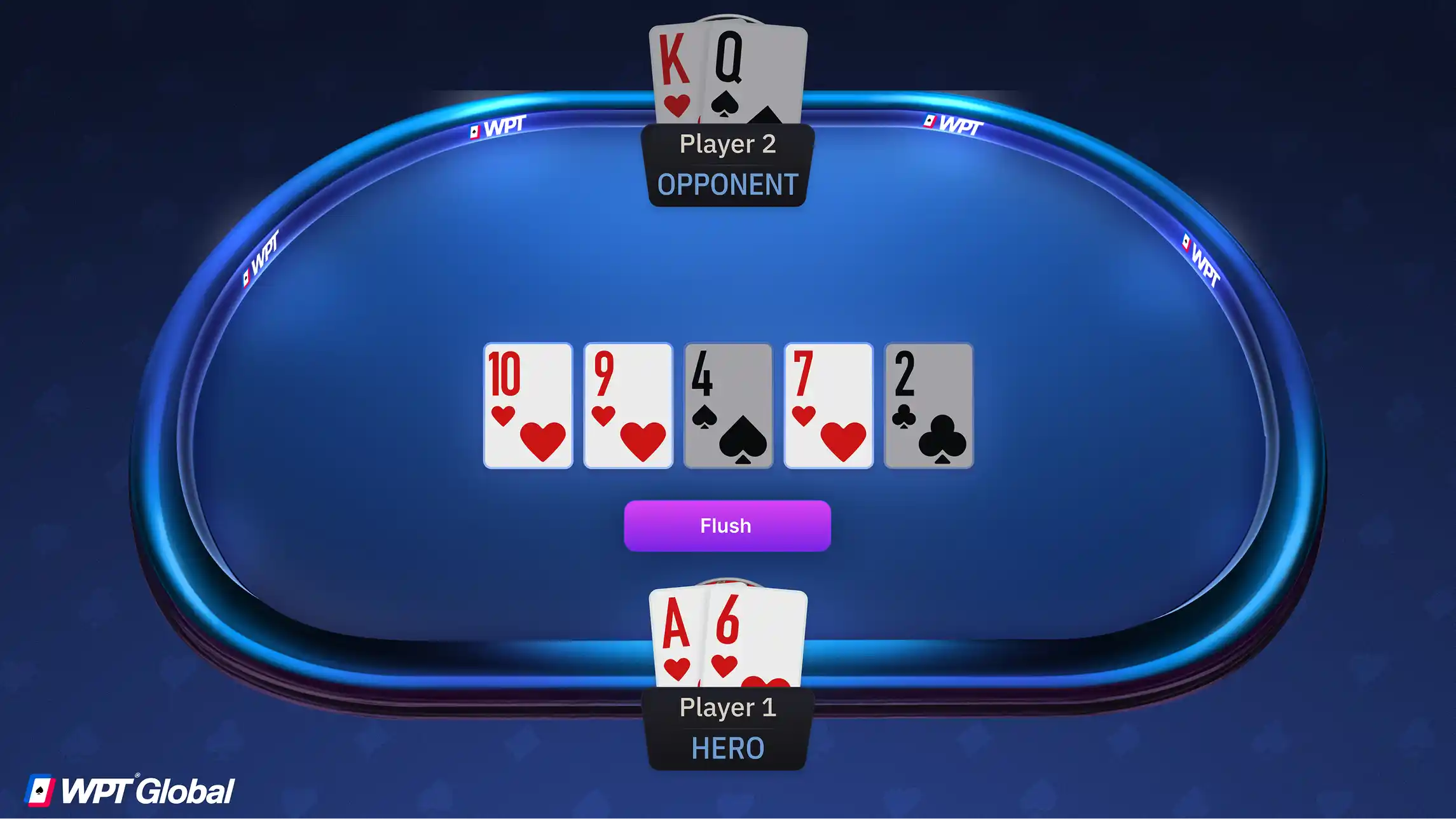
Beats a straight but loses to a Full House.
Odds of hitting it: 1 in 32.1 hands
A Flush is a hand with five cards of the same suit. If two players have a Flush, the one with the highest card wins.
A Flush beats a Straight, but can be beaten by a full house or a four-of-a-kind.
6. Straight – Five in a Row (Any Suit)
- Example:
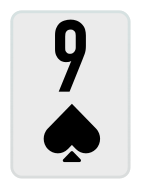
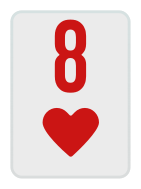
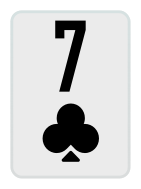
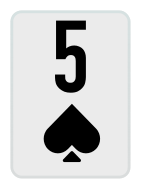
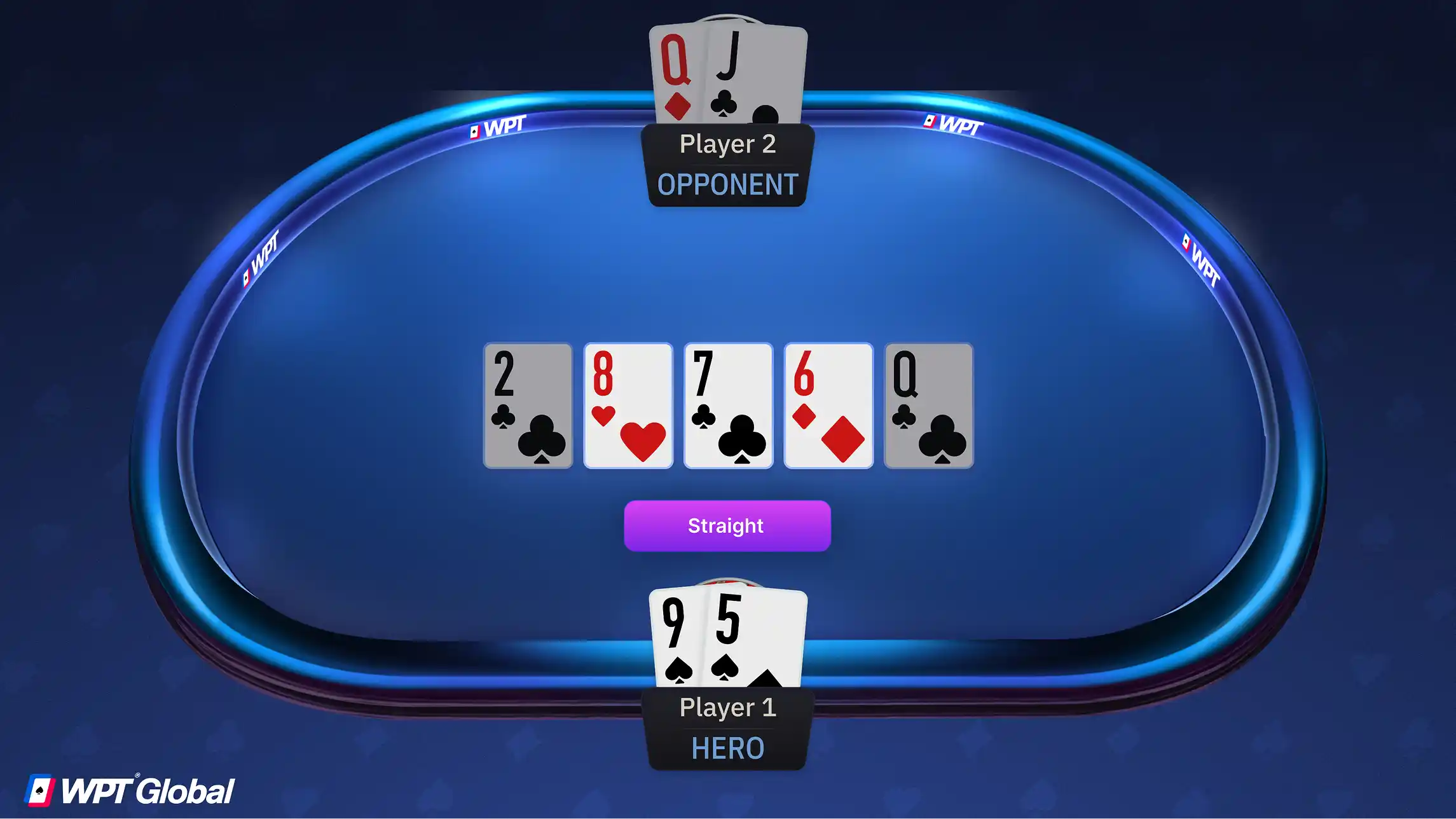
Beats Three-of-a-Kind, but loses to a Flush.
Odds of hitting it: 1 in 20.6 hands
A Straight is a hand with five cards in numerical order, but not all of the same suit. If two players have one, the highest top card wins.
A Straight is a decent hand, but can be improved by making a straight flush.
7. Three-of-a-Kind
- Example:
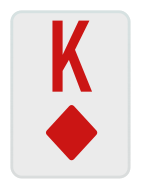
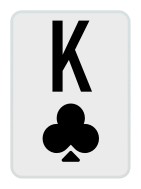
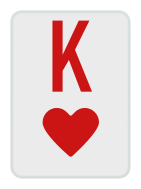
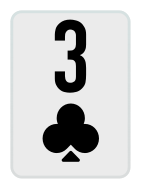
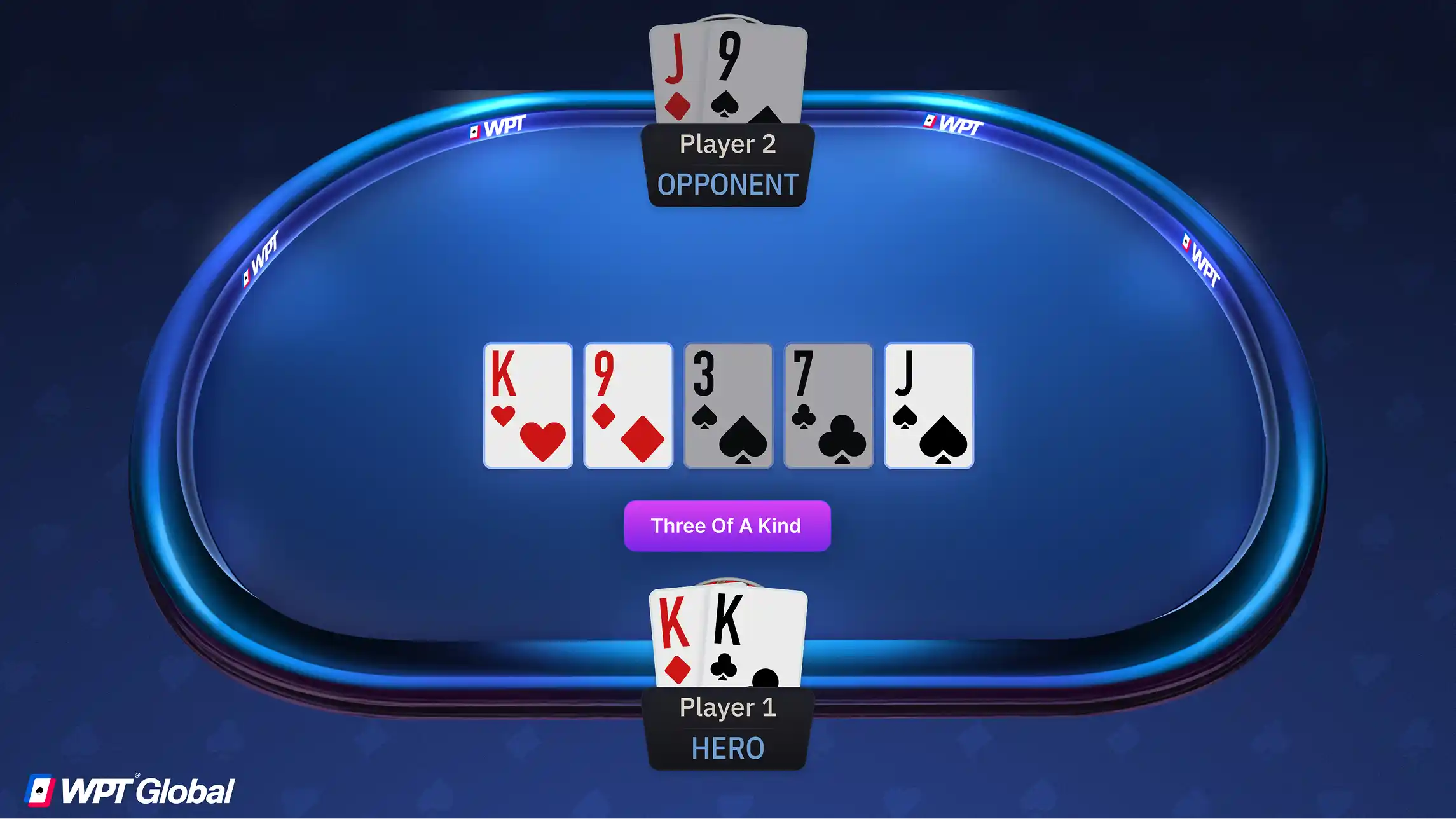
Beats Two Pair, but loses to a Straight.
Odds of hitting it: 1 in 19.7 hands
Three-of-a-Kind is a hand with three cards of the same rank and two random side cards. If two players have it, the higher-ranked three wins.
Three-of-a-Kind is a decent hand, but can be improved by making a Full House.
8. Two Pair
- Example:
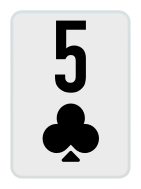
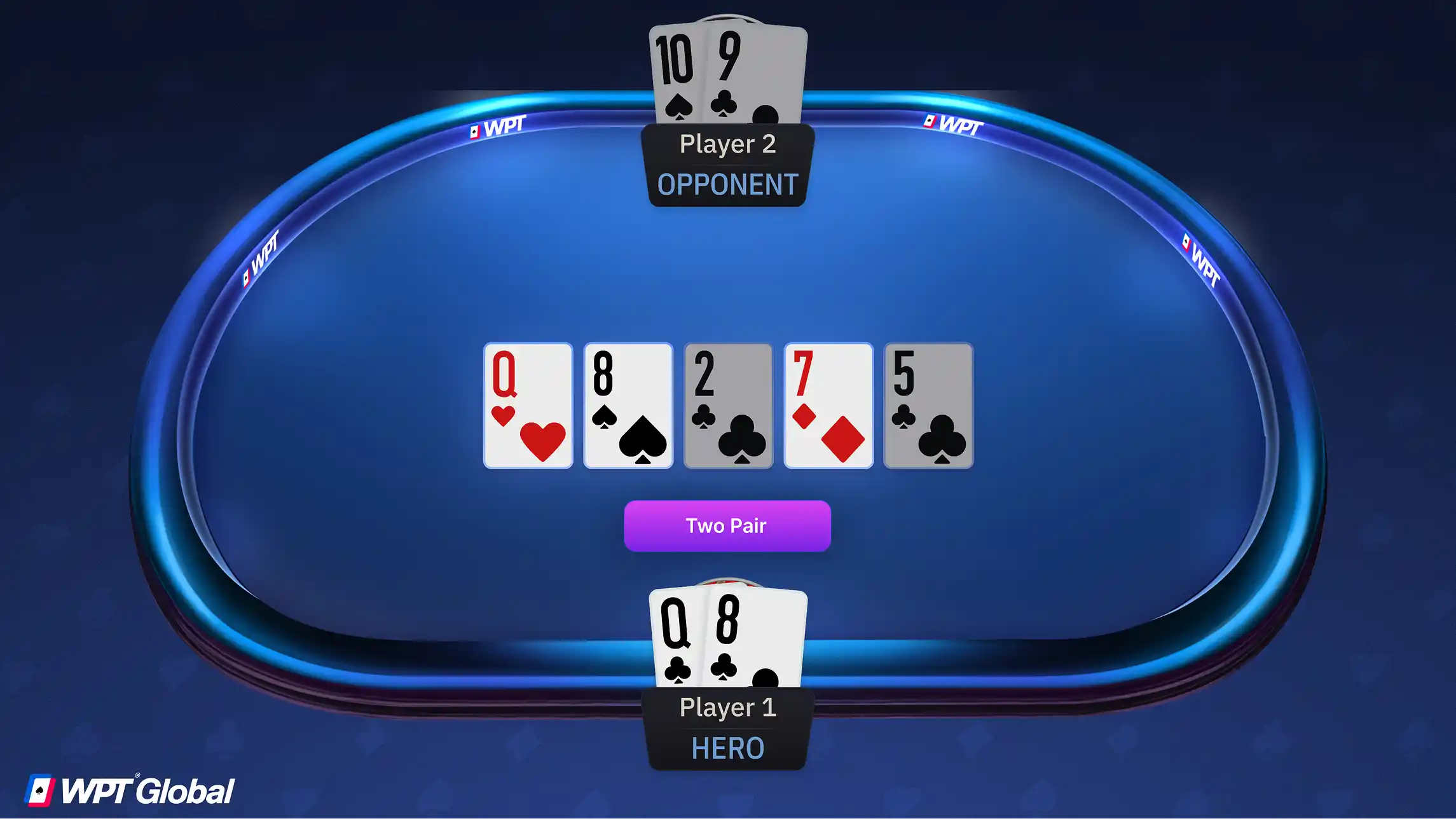
Beats One Pair, but loses to Three-of-a-Kind.
Odds of hitting it: 1 in 3.26 hands
Two Pair is a hand with two cards of one rank and two cards of another rank. If multiple players have two pairs, the highest pair wins. If they’re the same, the kicker (side card) decides.
Again, Two Pair can be improved by making a Full House.
9. One Pair
- Example:
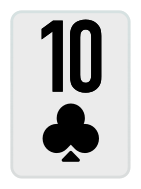
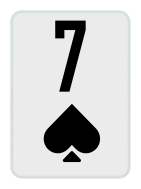
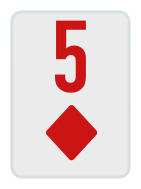
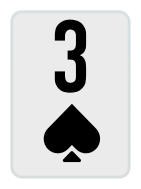
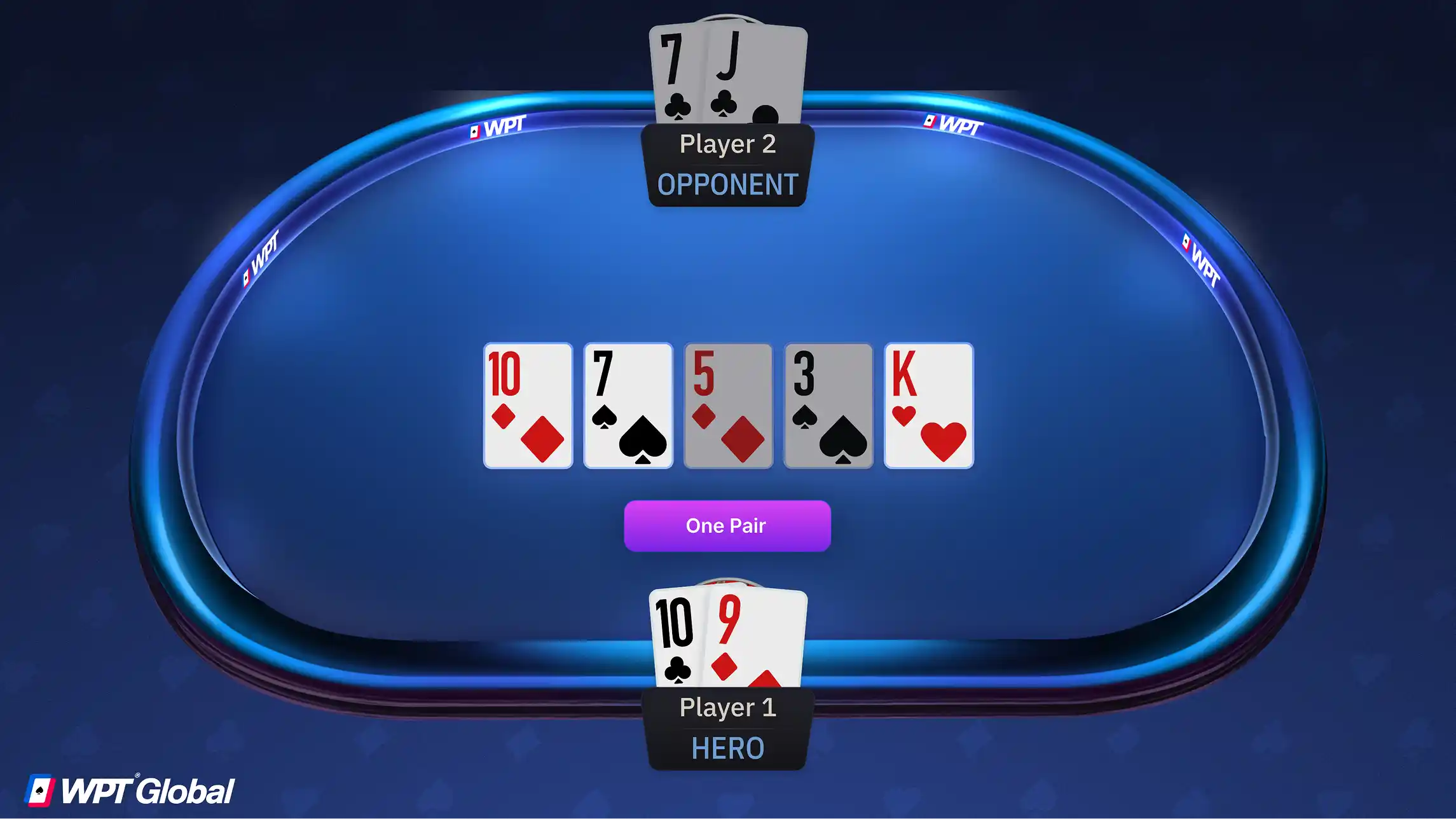
Beats High Card, but loses to Two Pair.
Odds of hitting it: 1 in 1.28 hands
One Pair is two matching cards and three random ones. If multiple players have a pair, the higher-ranked one wins.
One Pair is a weak hand, but can be improved by making Two Pair or Three-of-a-Kind.
10. High Card – The Bare Minimum
- Example:
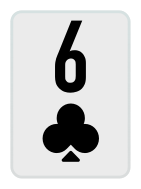
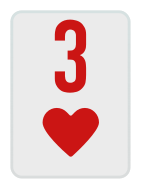
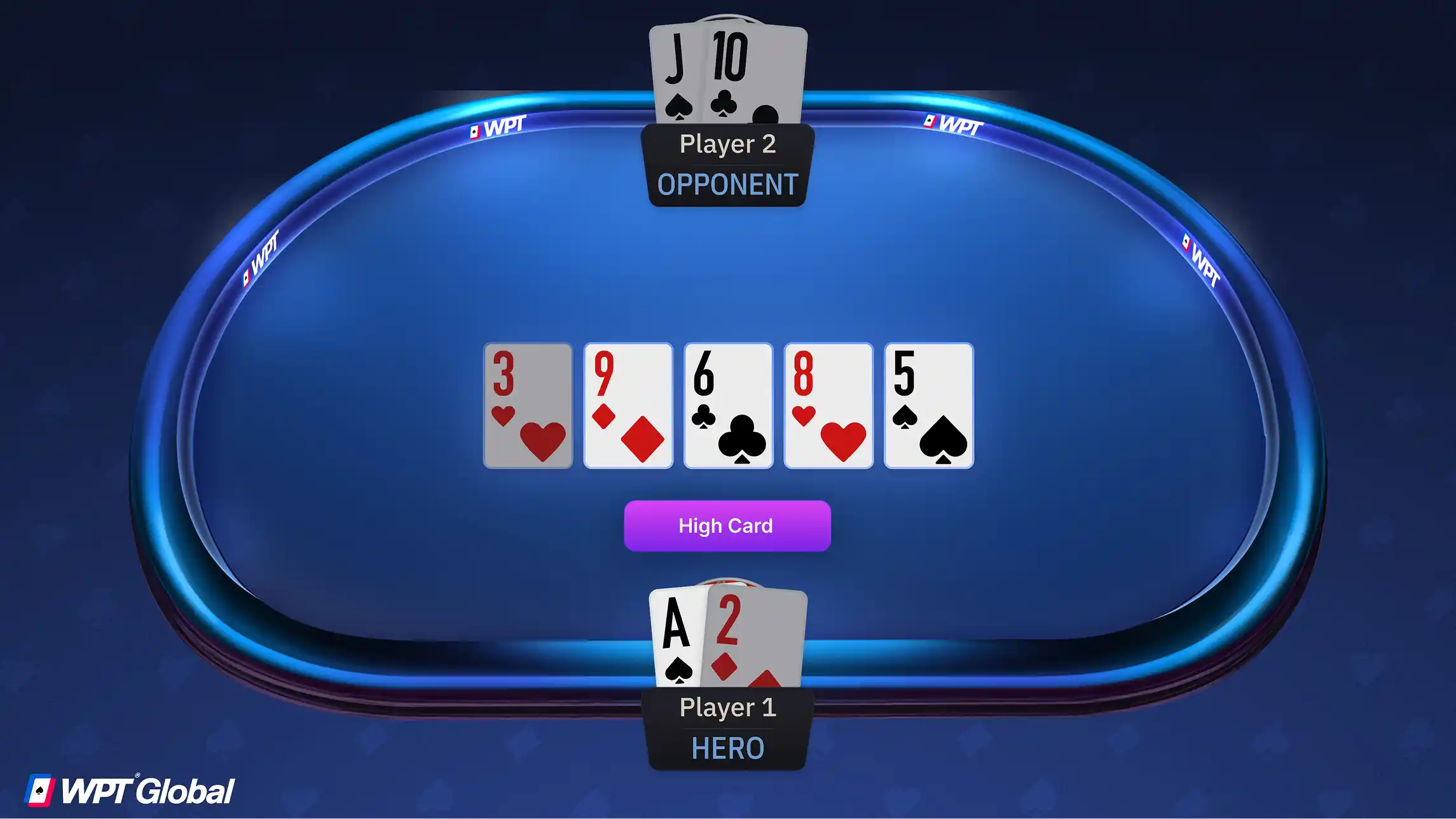
The weakest possible hand.
Odds of hitting it: Happens when no player makes a stronger hand.
If you don’t form any of the above hands, your highest card determines your strength. A High Card is the lowest possible hand in poker. If two players have the same High Card, the second-highest (kicker) breaks the tie. A High Card can only beat another High Card hand with a higher card.
Poker Hand Statistics
Poker is a game of probabilities. Every hand you’re dealt has a specific mathematical chance of occurring, and knowing these odds can help you make better decisions at the table.
How Many Poker Hands Are There?
There are 2,598,960 possible poker hands.
Your chances of landing any specific hand depend on the total combinations and the cards in play.
For example, while a Royal Flush is rare, a One Pair happens more than 40% of the time in Texas Hold’em.
A good poker strategy involves understanding the probability of getting specific hands and using that information to make informed decisions.
Know when to bet big. If your odds of hitting a strong hand are high, capitalize on it.
Avoid chasing bad draws. If the probability of improving is too low, folding saves chips.
Predict opponents' hands. If a Full House is statistically likely on the board, adjust accordingly.
Poker Hand Rankings Chart
Rank | Hand Name | Example | Probability for 7 Card Texas Hold’em | Combinations | Description |
|---|---|---|---|---|---|
1 | Royal Flush | | 0.0032% | 4 | The best possible hand in poker—an unbeatable combination. |
2 | Straight Flush | | 0.0279% | 36 | Five consecutive cards of the same suit, second only to a Royal Flush. |
3 | Four of a Kind |  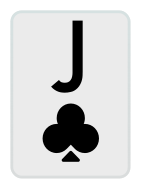 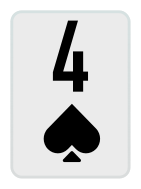 | 0.168% | 624 | Four cards of the same rank with one side card (kicker). |
4 | Full House | | 2.60% | 3,744 | A combination of three of a kind and a pair. |
5 | Flush | | 3.03% | 5,108 | Five cards of the same suit, not in sequence. |
6 | Straight | 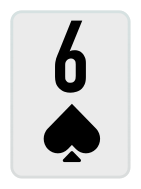 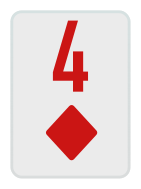 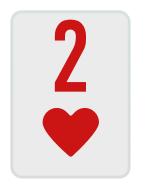 | 4.62% | 10,200 | Five consecutive cards of mixed suits. |
7 | Three of a Kind | 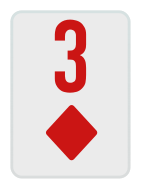 | 4.83% | 54,912 | Three cards of the same rank with two unrelated side cards. |
8 | Two Pair | 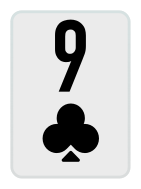 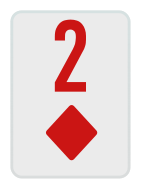 | 23.5% | 123,552 | Two different pairs, with a fifth card as a kicker. |
9 | One Pair | | 43.8% | 1,098,240 | A single matching pair with three random side cards. |
10 | High Card | | 17.4% | 1,302,540 | No ranked hand—your highest card is your best hand. |
Poker Hand Rankings: How They Change in Hold’em, Omaha, and Short Deck
Think all poker hands are ranked the same in every game? Not quite.
While the basics stay the same, different poker variants tweak the rules, which completely changes the way hands play out.
If you’re jumping between Texas Hold’em, Omaha Hi, and Short Deck Poker, here’s what you need to know:
Texas Hold’em
Texas Hold’em sticks to the traditional poker hand rankings. You can use any combination of your two hole cards and the five community cards to make the best five-card hand.
The strongest hands are rare, so big hands like full houses and straights are highly valuable. Learn more in our How to Play Texas Hold'em guide.
Omaha Hi
Omaha looks a lot like Hold’em, but there’s one huge difference—you get four (or more) hole cards, but you must use exactly two of them, plus three community cards, to make your final hand.
This means some hands that would be strong in Hold’em don’t even count in Omaha. Misreading your hand is a common rookie mistake!
For example:
- In Texas Hold’em, if the board reads, you have a Royal Flush, no matter what your hole cards are.
- In Omaha, you must use two of your hole cards. If your hole cards are, you don’t actually have a flush because you don’t have two hearts in your hole cards.
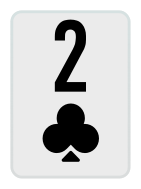
Learn more in our How to Play Omaha Poker guide.
Short Deck Poker
Short Deck (Six-Plus Hold’em) shakes things up by removing all the 2s, 3s, 4s, and 5s from the deck.
Fewer cards mean bigger hands happen more often, so the rankings change—flushes now beat full houses because they’re harder to hit.
Straights are also easier to make, so you’ll need to adjust how you play drawing hands.Learn more in our How to Play Short Deck guide.
Summary Table: How Hand Rankings Compare Across Poker Variants
The table below summarizes how poker hand rankings change in Texas Hold’em, Omaha Hi, and Short Deck Poker:
Hand Ranking | Texas Hold’em (Standard) | Omaha Hi (4 hole cards, must use 2) | Short Deck (Six Plus Hold’em) (Deck modified) |
|---|---|---|---|
Royal Flush | Same – best possible hand | Same – best possible hand | Same – best possible hand |
Straight Flush | Same | Same | Same |
Four of a Kind | Same | Same | Same |
Full House | Same | Same | Same |
Flush | Beats a straight | Beats a straight | Beats a full house |
Straight | Same | Same | More common (fewer cards in deck) |
Three of a Kind | Same | Same | Same |
Two Pair | Same | Same | Weaker hand (happens more often) |
One Pair | Same | Same | Same |
High Card | Same | Same | Same |
Poker Hand Absolute Value vs. Relative Value of Poker Hands
Not all strong hands are created equal. A Royal Flush? Always unbeatable. A pair of Aces? Depends on the situation.
This is where absolute hand value and relative hand value come into play.
Absolute Hand Value: The Fixed Ranking System
This is the basic poker hand hierarchy - a Royal Flush beats everything, a Full House beats a Flush, and so on.
No matter what, these rankings don’t change.
If you’ve got Quads (Four of a Kind), you’re sitting on a strong hand, no matter the game or scenario.
But… poker isn’t just about what’s in your hand - it’s about what your opponent might be holding.
Relative Hand Value: Strength Depends on the Situation
Your hand’s strength isn’t just about rankings - it’s about context.
Here’s when relative hand strength really matters:
Board Texture Matters – A Full House is a dream… unless there’s a possible Four of a Kind on the board.
The More Players, the Riskier It Gets – In a heads-up match, Two Pair might be golden. In a full table? Someone’s probably got something better.
Aggressive Opponents? Be Cautious – If a normally tight player is suddenly shoving all-in, they might have the nuts (the absolute best hand possible).
Why This Matters for Beginners
New players tend to overvalue hands in poker games like One Pair or Two Pair, assuming they’re strong in every situation.
But the reality? Even a great hand can be weak in the wrong spot.
For example: You have K-Q and hit Two Pair on a K-Q-5-8-10 board. Great, right? But if your opponent has J-9, they’ve just made a straight—and your Two Pair is now trash.
Another example: You have A-A preflop (a dream hand). But the board runs out J-J-10-10-K. Now, any player holding a Jack or a 10 has a Full House, crushing your Aces.