



 Customer Dispute Resolution Page
 Help Center
 Affiliate Program
Play Anytime, Anywhere
In this article



Poker rake is an unavoidable part of the game that can directly affect your long-term win rate and overall profit potential. Therefore, if you want to maximize your return on investment (ROI), it's important to understand how rake is taken, why it exists, and the best way to reduce its impact.
This guide explains these things and more, so you can make smarter decisions before you ante up. Understanding how poker rake works is essential for all serious poker players who wan to play poker efficiently and keep more money from each winning pot.
Rake in poker is a small percentage fee taken from cash game pots and tournament buy-ins by the poker room or the site hosting the game. This fee goes towards the operator's costs, meaning it's the cost of playing cash games and poker tournaments.
For example, if you enter a $10 online poker tournament, the operator may add a $1 fee to the buy-in. That means the total cost of playing the tournament is $11.
In cash games, operators only charge rake if a hand goes to the flop. In poker speak, this is known as a no-flop, no-drop policy. The "drop," in this case, is the amount of rake being taken from the pot.

This no flop, no drop system ensures that players only pay rake when the real action occurs, protecting them from unnecessary fees in smaller or folded pots.
In online poker rooms, rake is calculated automatically by the site’s online software, but in live poker rooms it’s collected manually by the dealer right there at the table. All live and online poker rooms must display their rake information so everyone knows how much they have to pay before they ante up.
Game formats and settings determine how a player pays rake. In online cash games, the rake is a percentage of the pot up to a certain amount (aka the rake cap).
A poker room's software calculates this automatically and makes the necessary deductions in real-time. That means 100% of the money in the pot goes to the winning player.
In live poker rooms, rake is taken from cash game pots at the end of the hand. For example, if the poker room charges 6% rake with a cap of $5, and the final pot is $100, the dealer will remove $5 before paying the winning player.
Tournament poker rake is always taken at the point of entry because it's added to the buy-in. So, if the tournament costs $50 and the poker room charges 10% rake, the total cost of entry is $55.
This fee structure is standard across most poker sites and live games, ensuring that every player pays the same amount relative to the buy-in.
That's a general overview of how rake works in poker. However, the ways in which a poker room extracts rake from its games can vary, as we'll explain in the next section.
Poker players typically use the term rake to explain the money taken from pots in cash games and the fee added to tournament buy-ins. There are, however, different rake structures used in online and live games.
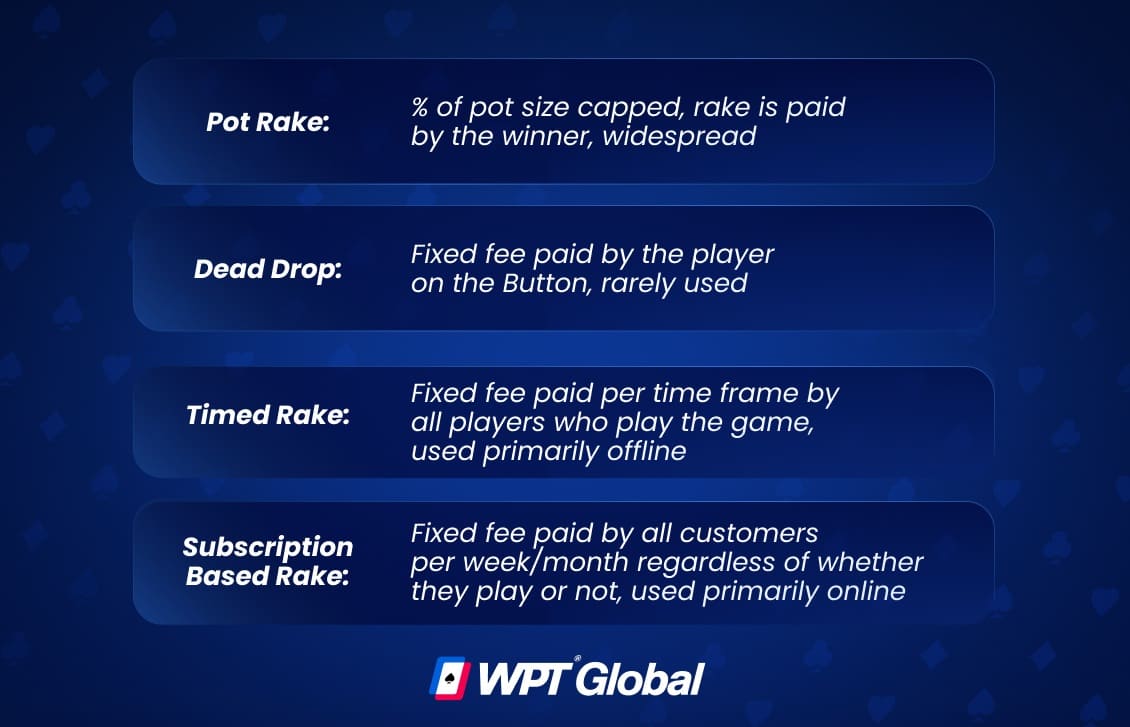
In most cases, tournament poker rake is a fixed percentage of the buy-in which is clearly shown before registration so players know exactly what they pay. For cash games, there are four main structures:
Pot Rake: This is the most commonly used rake structure in online and live poker rooms. Under this system, rake is a percentage of the pot. Most sites charge between 4% and 7% rake on cash games. The average pot rake in cash games is 10%. As stated, every poker room puts on rake cap on cash game pots.
Dead Drop: The dead drop rake structure isn't used by online poker rooms, but you do see it in some live games. Instead of taking money from the pot, the dead drop system takes a fixed payment from the player on the button.
Timed Rake: This rake structure is basically a table charge that everyone pays at set intervals. For example, a poker room might charge $5 per player per hour in a $1/$2 cash game. No money is taken from the pot under this system. Like the dead drop format, timed rake isn't used online, and it's becoming less common in live games.
Subscription-Based Rake: Some online poker sites, including ClubWPT, cover their operational costs by charging a subscription fee rather than rake. This model is commonly used in regions where real-money gambling isn't regulated. Subscription-based poker sites use virtual currencies instead of cash buy-ins. Despite the fact that players aren't making real-money bets, they can exchange virtual credits for prizes. This structure eliminates your traditional rake by offering a rake-free alternative for players who prefer predictable costs rather than variable fees per pot.
You need to take these formats into account when you're deciding where to play poker because, as we'll explain in the next section, rake impacts your long-term win rate.
Although poker rake is a necessary cost of playing poker, it also has a long-term impact on your win rate, ROI, and the potential profitability of every session. Specifically, rake eats into your profits. Therefore, you need to factor a game's rake structure into your overall strategy.
Paying high rake reduces your return on investment (ROI), so the games you play and where you play them matter. Lower rake games, especially at higher stakes or on competitive poker sites, can greatly increase your edge and reduce your overall costs. However, there are a few tips on how to minimize the impact of rake by comparing poker rooms and adopting an optimal pre-flop strategy.
The easiest way to reduce the amount of rake you pay is to compare charges across online poker sites and adopt a solid pre-flop strategy:
Compare Rake Charges
All reputable online poker rooms publish their rake structure, which is usually found in the FAQ or terms section, so you can compare before you start playing. The two things to consider are the percentage taken and the rake cap. The average rake charge for online cash games is 5% and for tournaments it's 10%. At WPT Global, for example, the rake on cash game pots is 4%.
Rake caps depend on the cash game you're playing, the stakes, and the number of players at the table. Therefore, the general rule is that the cap should be no more than 5 big blinds. In most cases, online poker sites cap the rake at 3-4 big blinds. So, if you're playing a $1/$2 cash game, the rake cap should be between $6 and $10.
Play the Right Hands
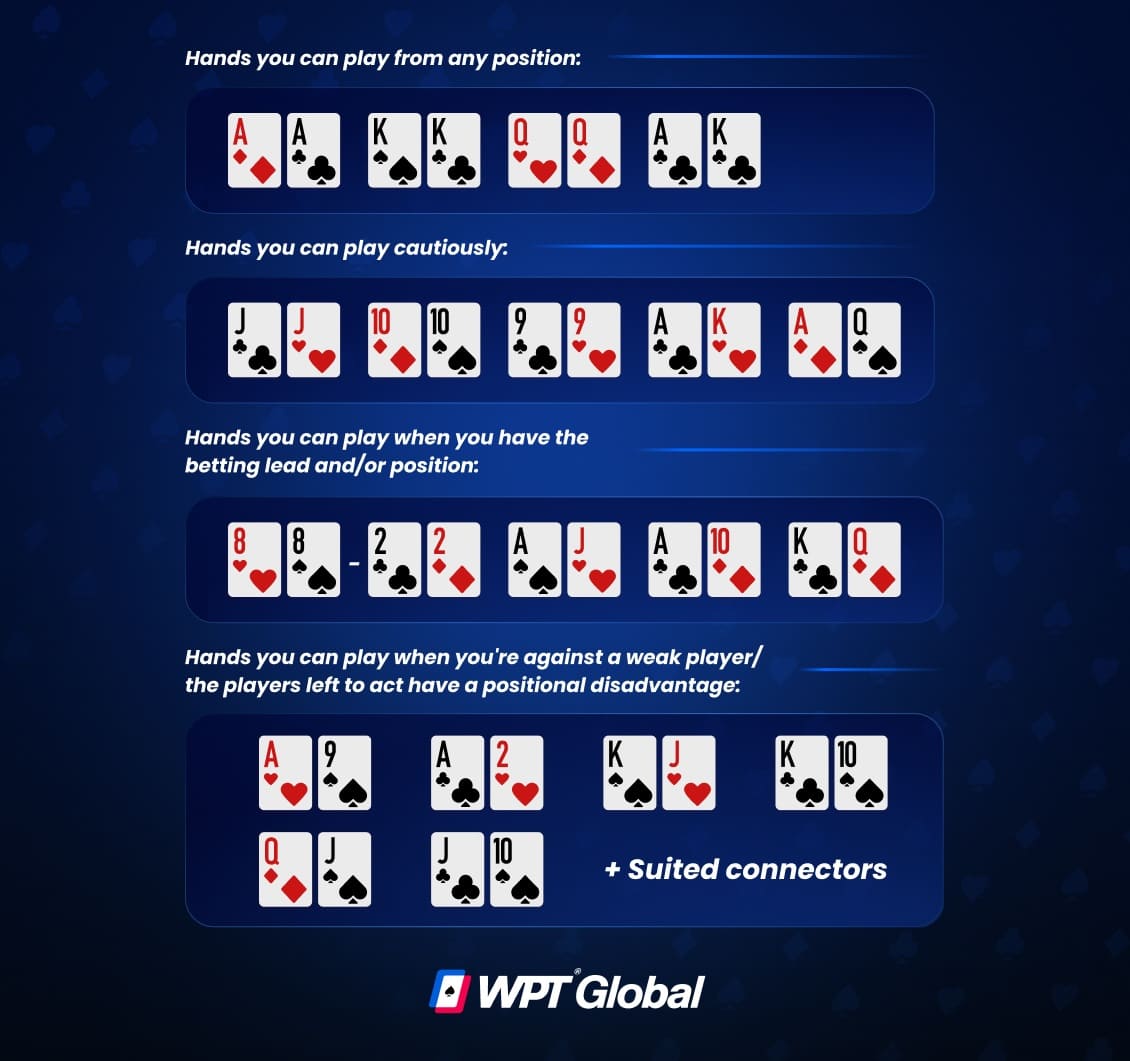
One of the fundamental skills everyone should acquire when they first learn how to play poker is hand selection. This simply means you should have a consistent and, in most cases, conservative selection of hands you enter pots with. A simple rule of thumb: if a hand isn’t strong enough to raise, it’s usually not worth playing.
You want to give yourself the best chance of winning when you do enter a pot. One way to do this is to choose your hands carefully. This prevents you from playing too many weak hands that not only cost you the pot but rake. We can't tell you which hands to play because the requirements vary depending on the game you're playing, your opponents, your stack size, and your position at the table. Focusing on strong starting hands can help reduce the number of pots you enter unnecessarily, which means less rake paid and more long-term value.
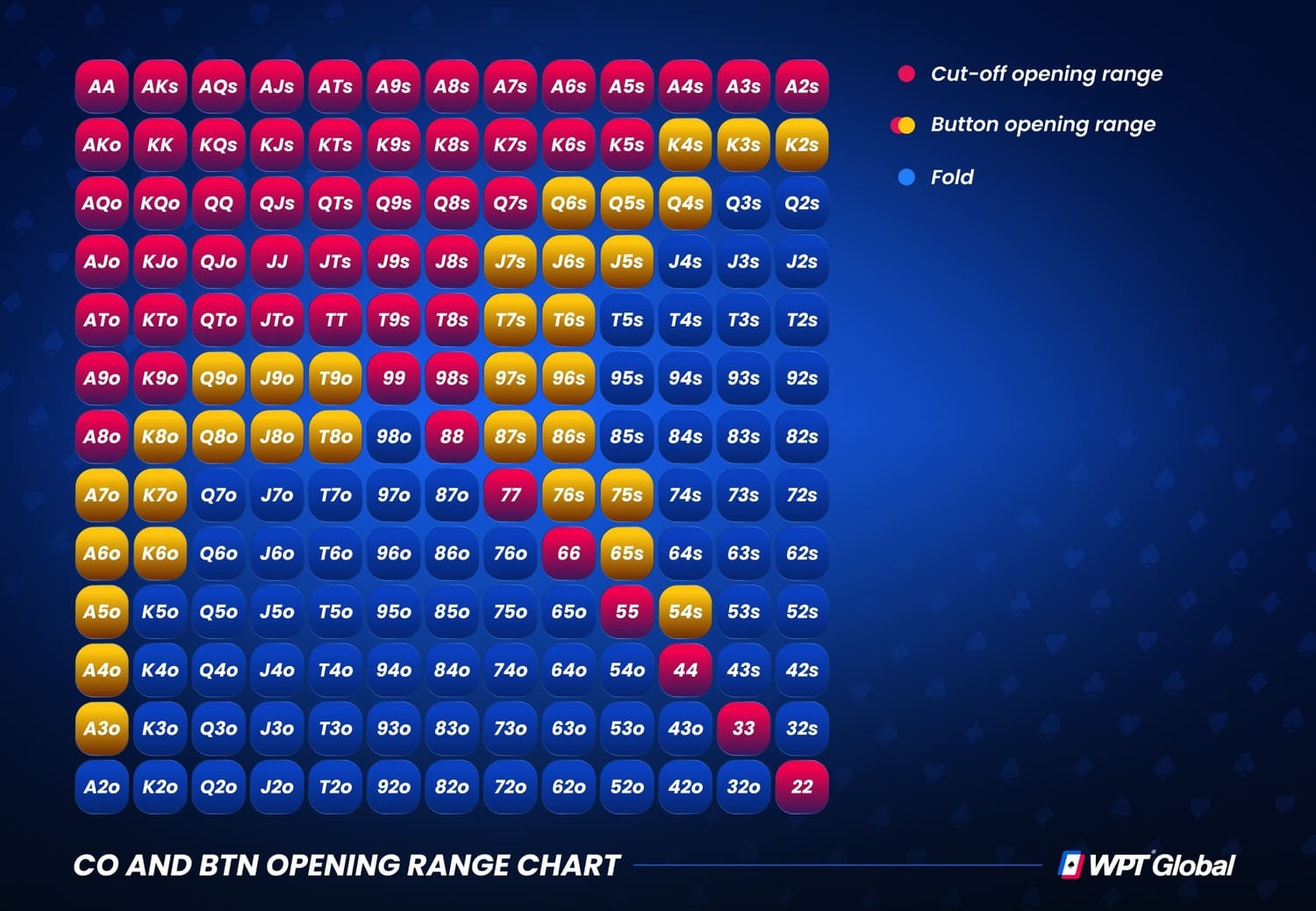
You can also use a free opening range chart to tell you the percentage of hands you should raise in various scenarios. For example, if you're playing Texas Hold'em in the cutoff and the first player to act, it's fine to open with the top 28% of starting hands. Move to the button and the percentage increases to 42%.
Poker rake is unavoidable, so understanding it and adapting your strategy is key to allow you to work around its effects and protect your winnings as best you can. That means considering the rake structure used for the poker games you want to play and comparing what different sites charge.
Always track how much rake you pay over time, it is the small differences in rake structure that can add up to thousands of dollars in savings for frequent players.

The average poker room in a land-based casino charges 10% rake for cash games and up to 20% for tournaments. All poker rooms cap the amount of rake they take from cash game pots and from tournament buy-ins.
Online poker rooms use rake to cover operational costs, such as server fees and staff. Rake doesn't go into a prizepool. Only the main tournament buy-in goes towards the prizepool.
No, rake is a small fee taken from cash games and poker tournaments. House edge is the statistical advantage a casino has in specific games. For example, in blackjack, the casino has approximately a 2% advantage, which means, in theory, you stand to get back $98 for every $100 wagered.
No flop, no drop is poker jargon for a rake structure that only removes money from pots when hands reach a flop. So, if you raise pre-flop in a game of Hold'em and everyone folds, no rake is taken from the pot.
Yes, everyone at a poker table pays rake. It's an unavoidable expense that must be factored into the cost of playing poker online and live.
The average poker room in a land-based casino charges 10% rake for cash games and up to 20% for tournaments. All poker rooms cap the amount of rake they take from cash game pots and from tournament buy-ins.
No flop, no drop is poker jargon for a rake structure that only removes money from pots when hands reach a flop. So, if you raise pre-flop in a game of Hold'em and everyone folds, no rake is taken from the pot.
Online poker rooms use rake to cover operational costs, such as server fees and staff. Rake doesn't go into a prizepool. Only the main tournament buy-in goes towards the prizepool.
Yes, everyone at a poker table pays rake. It's an unavoidable expense that must be factored into the cost of playing poker online and live.
No, rake is a small fee taken from cash games and poker tournaments. House edge is the statistical advantage a casino has in specific games. For example, in blackjack, the casino has approximately a 2% advantage, which means, in theory, you stand to get back $98 for every $100 wagered.
The average poker room in a land-based casino charges 10% rake for cash games and up to 20% for tournaments. All poker rooms cap the amount of rake they take from cash game pots and from tournament buy-ins.
No flop, no drop is poker jargon for a rake structure that only removes money from pots when hands reach a flop. So, if you raise pre-flop in a game of Hold'em and everyone folds, no rake is taken from the pot.
Online poker rooms use rake to cover operational costs, such as server fees and staff. Rake doesn't go into a prizepool. Only the main tournament buy-in goes towards the prizepool.
Yes, everyone at a poker table pays rake. It's an unavoidable expense that must be factored into the cost of playing poker online and live.
No, rake is a small fee taken from cash games and poker tournaments. House edge is the statistical advantage a casino has in specific games. For example, in blackjack, the casino has approximately a 2% advantage, which means, in theory, you stand to get back $98 for every $100 wagered.


 Local Payment Methods
 Cards
Cards Crypto
 E-Wallets
 Apple Pay
 Google Pay
 Instant Bank Payments
Some methods may not be available in your region. Please contact support if you experience any issues.